Skip to content
LeasideLock ExpertsOpen 24/7 (289) 806-8979
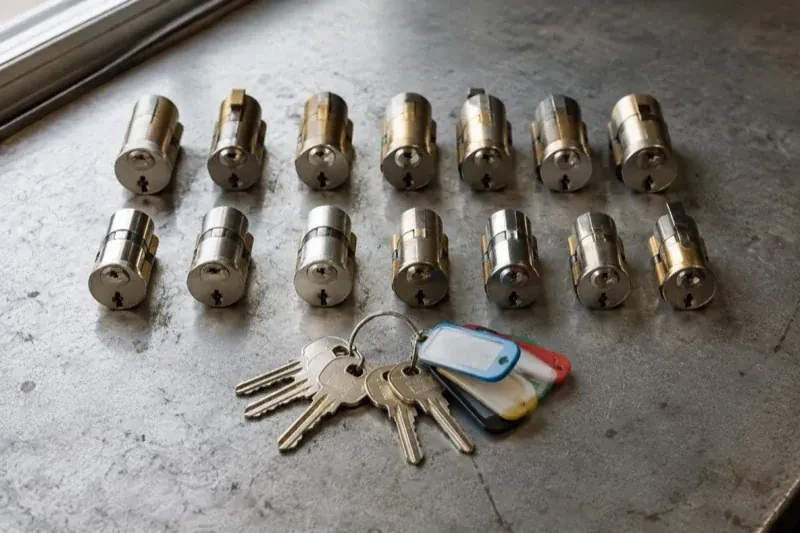
Two rows of lock cylinders on a metal surface with keys and colored key tags in front. — Master Key System Design, Toronto

Commercial · Toronto

Master Key System Design

The office key ring has become the org chart. Every manager carries a fistful of cuts, a couple of staff hold copies nobody remembers issuing, and when someone asks which key opens the records room, three different people give three different answers.

In plain words

In a building shared by several tenants, departments or contractors, master key system design draws a clear line between who needs a broad master and who needs a single change key for their own door. Cleaners, maintenance staff, department heads and the owner typically sit at different levels, and the hierarchy is built to reflect that rather than to make life easier for whoever is issuing keys that week. The chart that results shows every level at a glance, which makes it far simpler to answer a basic question: who can currently get into this room.

Sound familiar?Toronto

The call
The new wing was built with its own brand of cylinder, so the two-year-old keys from the original building do not open a single door in the addition. Staff are now carrying two separate key rings just to move around one workplace.
NextHow the visit goes

Master Key System Design · Toronto

How the visit goes

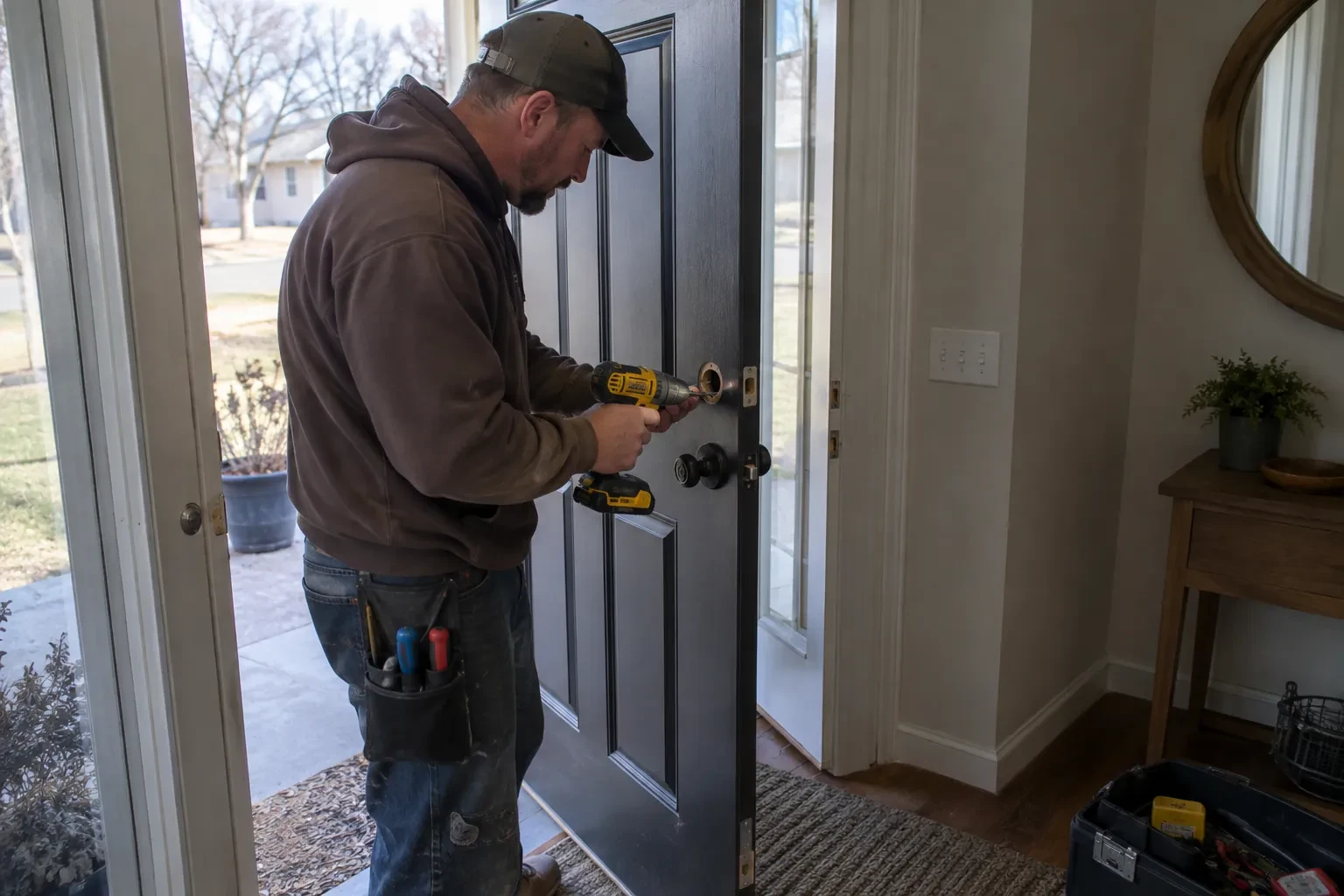
Technician in a cap using a yellow drill at the round bore of a dark door, with a black knob below it.
  1. Scene 1

    Where a sub-master genuinely earns its place

    Not every group of doors needs its own level. The assessment looks for places where a sub-master is a real convenience, such as a department, a floor, or a set of storage rooms used by the same small team, rather than adding levels for their own sake. A hierarchy with more levels than the business actually uses is harder to manage and easier to get wrong later, so this stage is as much about deciding what not to build as it is about what to include, before any pins are cut or any key blanks are ordered.

  2. Scene 2

    Building the hierarchy from the bottom up

    Design starts with the smallest unit, the individual change key, and works upward. Each door that stands alone gets its own combination; doors that should share access are grouped under a sub-master; and a single top-level master is reserved for the short list agreed earlier. Building in this order keeps the levels honest, since a sub-master or master is only created where a real group of doors justifies it, rather than being added because it seems useful in the abstract. The result is a hierarchy that matches the organization rather than one imposed on top of it.

  3. Scene 3

    Care that keeps the hierarchy intact

    A little routine care keeps a master key system working the way it was designed. Cylinders should get whichever lubricant the cylinder maker actually recommends, since that varies by manufacturer and some rule out graphite while others call for a light oil, and a key that starts needing a wiggle is worth attention before it is forced or breaks off. None of this maintenance touches the pinning itself, so the hierarchy stays exactly as documented on the chart through years of ordinary use.

In the van

  • Locking chart storage cabinet
  • Key cutting machine
  • Restricted or standard key blanks
  • Cylinder decoders
  • Change and master keys

What shapes the quoteLeaside Lock Experts

Compatibility of existing hardware
Cylinders that can join the new hierarchy without modification keep the project smaller. Hardware that is mismatched, worn or built on an incompatible keyway needs replacing to fit cleanly into the plan, and that replacement hardware is a separate line from the design and pinning work.
Testing scope before handover
Testing every cylinder individually and then testing each master and sub-master across its full group takes time proportional to how many doors and levels exist. A larger hierarchy with more levels to verify against more doors adds to that testing time.
Room reserved for future growth
Building spare capacity into the keying platform so a business can add doors later without a full redesign takes deliberate planning during the design stage. A property with clear expansion plans may choose a platform with more reserved combinations, priced differently from a minimal, current-needs-only design.

FeesSame any hour

Have it ready

Before you call · 0 / 3

(289) 806-8979

Ask us anything about locks

Who should hold the top-level master key?

As few people as the business can genuinely operate with. Every additional holder is another way a full-access key can be lost, borrowed or copied without anyone deciding that should happen. A useful test during design is asking, for each proposed holder, whether they need to open every single door on the property or only a defined group; the second answer usually points to a sub-master instead.

Can key duplication be restricted so copies cannot be cut elsewhere?

Yes. With a restricted or patented keyway, blanks are only available through the manufacturer's authorized record, so a copy is not cut at an ordinary hardware counter without going through that channel. This does not make a key impossible to duplicate, but every legitimate copy passes through a record the owner controls, which a standard keyway cannot offer.

Can my existing locks be used, or do I need all new hardware?

Many existing cylinders can join a new hierarchy as they are, once their keyway and condition are confirmed compatible. Others, particularly older or mismatched hardware, are replaced so the whole system pins cleanly without cross-keying. The assessment identifies which doors fall into each group before any work begins, so the plan reflects what is actually on the property rather than assuming everything needs to change.

Torontoinformation

TorontoOntario

Town
Toronto
In business
34 years
Hours
Open 24/7
Nights, weekends and holidays, same fees
Visits
On-site assessment preferred. Request a visit or call.

2021 census: what it means at the door

Every square is one home in a hundred.

  • 58 in 100 homes · older homes
  • About 58% of homes in Toronto were built in 1980 or earlier, according to the 2021 Census.Decades of seasons move a frame, and an older house often has a front door that locks easily in summer and fights in winter. Setting the strike with the seasons in mind, and choosing a lubricant that stays fluid in the cold, keeps it working year round.
  • Single-detached houses make up about 23% of homes in Toronto (2021 Census).Where housing is mostly apartments and condos, mailbox locks are a regular call. A worn or lost mailbox key is a small job that a locksmith handles alongside the suite door, and the new lock comes with fresh keys cut on the spot.

Source: Statistics Canada, Census Profile

Open Toronto in Google Maps

On-site assessment

Request a visit.

The office key ring has become the org chart.

(289) 806-8979, open 24/7.