Sound familiar?Toronto
- The call
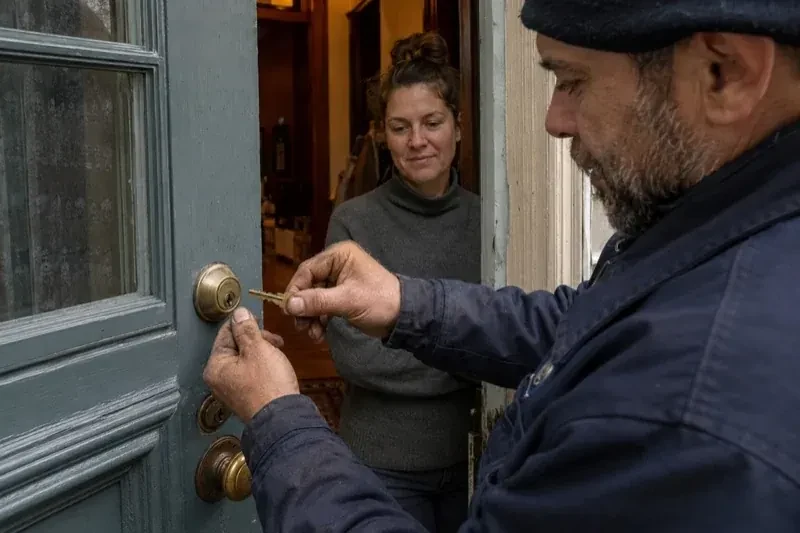
- The key went in stiffly, turned a quarter of the way, and came out in two pieces. Half of it is still inside the cylinder of the aluminium storefront door, and the deadbolt is hooked firmly into the frame.
It is ten to nine, three staff are on the sidewalk with their coffees, and the key that has opened the glass front door for six years will not turn. The cylinder feels gritty, the door is locked, and the first customer is already parking.
The end of a business lockout is a paper trail as well as an open door. You receive a plain written account of which door was opened, how, what condition the hardware was in, what was replaced, how many keys were cut and who took them. Landlords, insurers, franchisors and head offices routinely ask for exactly this, and it saves an awkward conversation later. Where a door sits on an exit route, the record also notes that it still releases from inside with a single motion and without a key, so everyone can leave the building without hunting for anything.
Sound familiar?Toronto
Business Lockout Service · Toronto
Scene 1
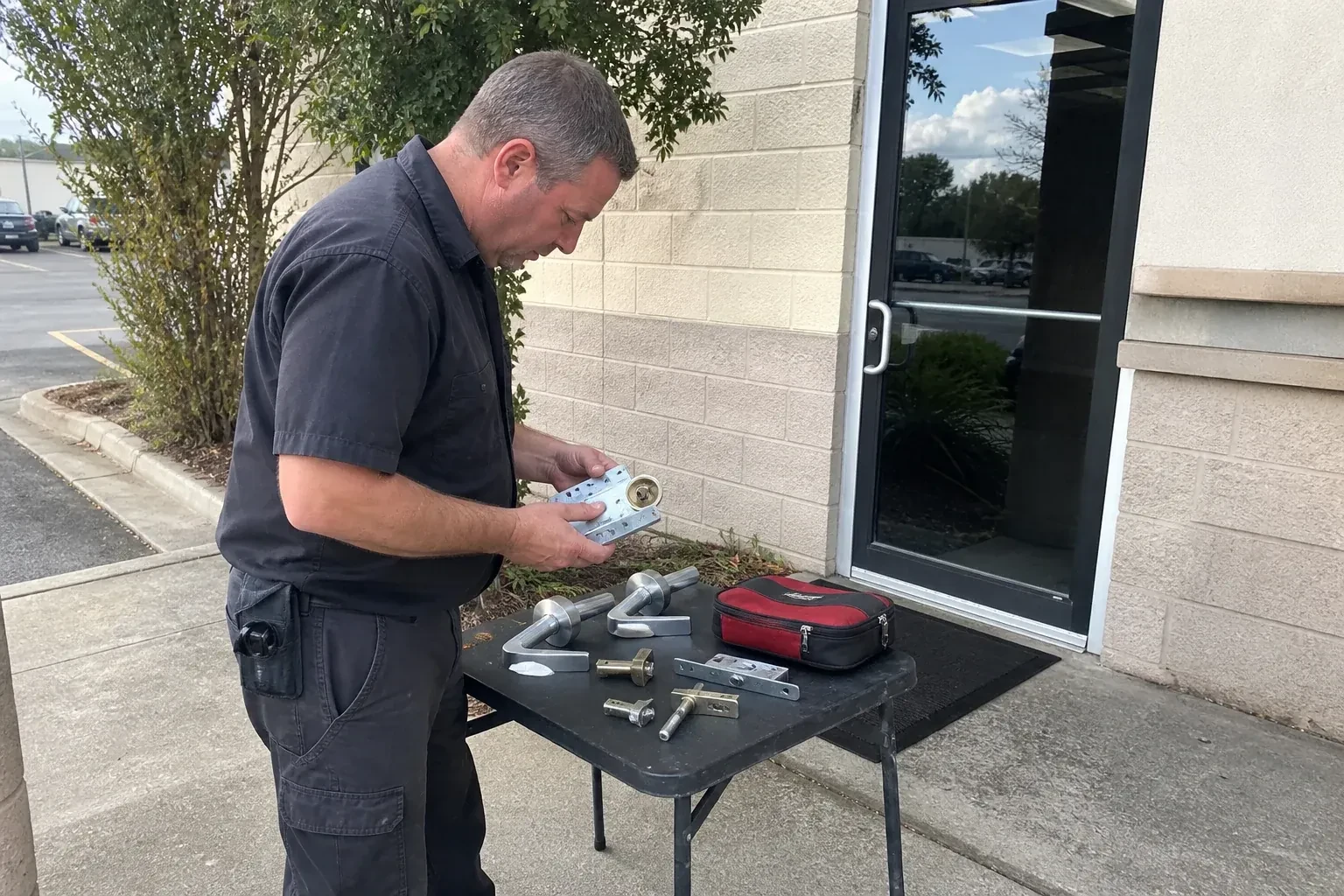
The front door is rarely the only lock a business relies on. The locksmith asks about the rear service door, the side door to the compactor, a roll-up shutter and its padlock, the gate on the compound, and interior doors that matter such as the cash office, the stockroom, the server closet and the staff washroom. Some of these may be on the same key as the front door and others on their own. Knowing the map before starting means the right cylinders are rekeyed together afterwards, a padlock is not forgotten, and a second door that could have been opened more gently is not overlooked while everyone stares at the first.
Scene 2
The narrow stile of a glass storefront door carries a mortise cylinder that turns a cam inside a slim lock case. The locksmith picks or decodes that cylinder, then works the cam through its full travel to draw the hookbolt out of the frame or lift the deadlatch. A hookbolt hangs into its strike and cannot be pushed back with a shim, so the cylinder is the honest route in. Once open, the cylinder's set screw and cam alignment are checked, because a cam that has slipped a few degrees is a common reason the key stopped working, and the paddle inside is tested so staff can leave through the same door without a key.
Scene 3
The visit ends with every door that was worked on cycled from both sides, open and closed, with the customer's own key. A hookbolt is watched to seat fully in its strike, a deadlatch is checked to catch on its own when the door swings shut under the closer, and a lever is tested to stay locked from the corridor while turning freely inside. Whoever locks up that evening is shown what was done, so the closing routine holds no surprises. Any hardware replaced is demonstrated and the packaging and old parts left with you, and the door is locked once more with your key before the van leaves.
What shapes the quoteLeaside Lock Experts
FeesSame any hour
Fewer than most businesses think, and every one of them named. Two people who can open, one of whom can be reached on a day off, cover the door. Cleaners and contractors get a key only if they need one and hand it back when the arrangement ends. Write down who has what, collect keys when people leave, and rekey when one does not come back. Interior keys for the cash office or stockroom follow the same rule on a shorter list.
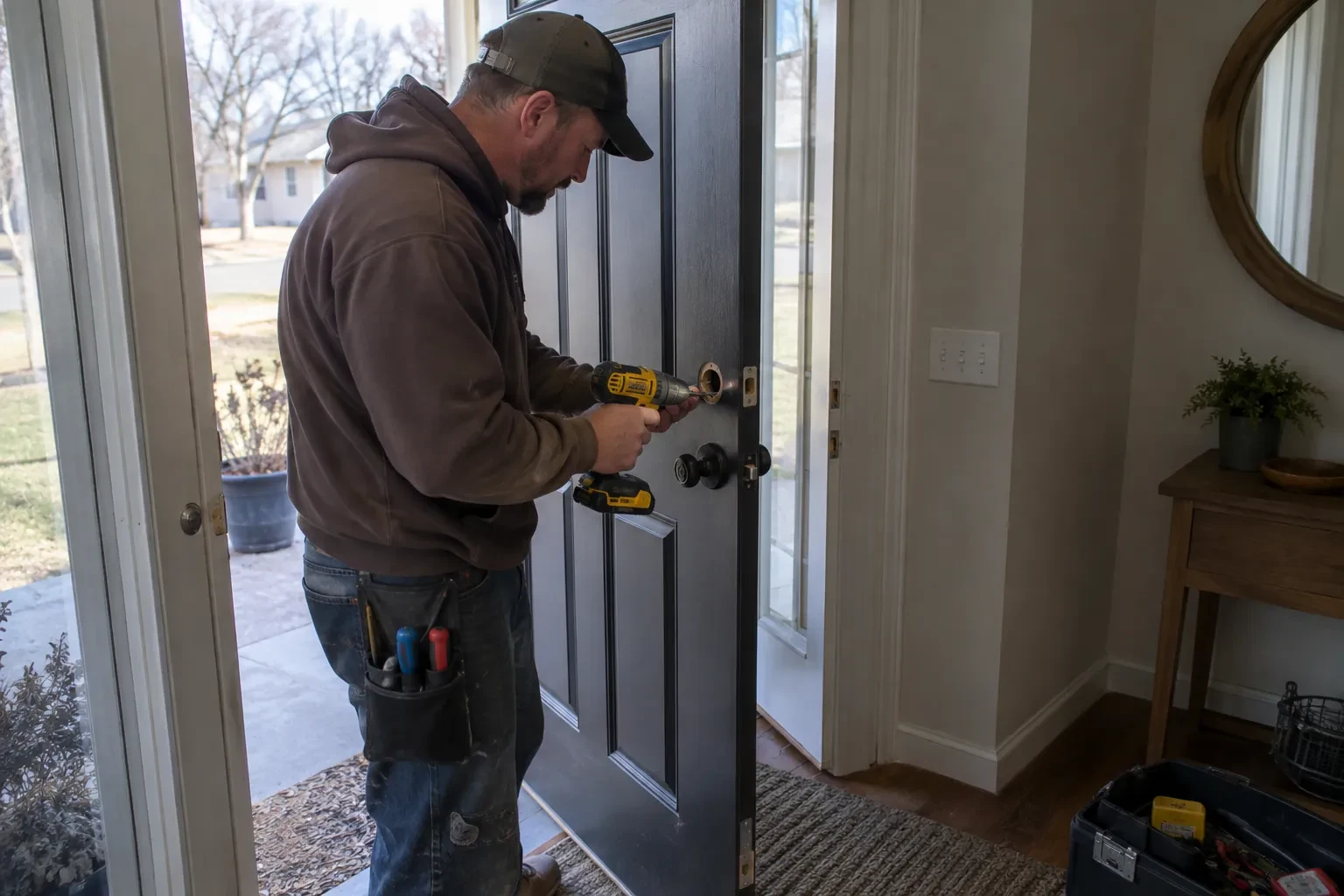
In almost every case the door, the glass and the lock are untouched. The mortise cylinder in the narrow stile is picked or decoded so the cam turns exactly as it would for your key, and the hookbolt or latch withdraws. Drilling comes up when a cylinder has seized, is packed with a broken key, or its security features and condition rule out a clean non-destructive opening, and if it comes to that you hear about it first and a new cylinder goes in during the same visit.
It is treated as one, with the same authority check: your new lease and identification settle it. The locksmith opens the previous occupant's locks, then rekeys or replaces them so keys still floating around from the last tenant stop working. It is also the moment to decide how the unit will be keyed: one key for every door, separate keys for the cash office and stockroom, or cores that suit a growing staff.
TorontoOntario
Business Lockout Service · Flemingdon Park, Leaside, Parkview Hill, Thorncliffe, Woodbine Heights
Every square is one home in a hundred.
On-site assessment
It is ten to nine, three staff are on the sidewalk with their coffees, and the key that has opened the glass front door for six years will not turn.
(289) 806-8979, open 24/7.
On-site assessment preferred · (289) 806-8979, open 24/7