Skip to content
LeasideLock ExpertsOpen 24/7 (289) 806-8979
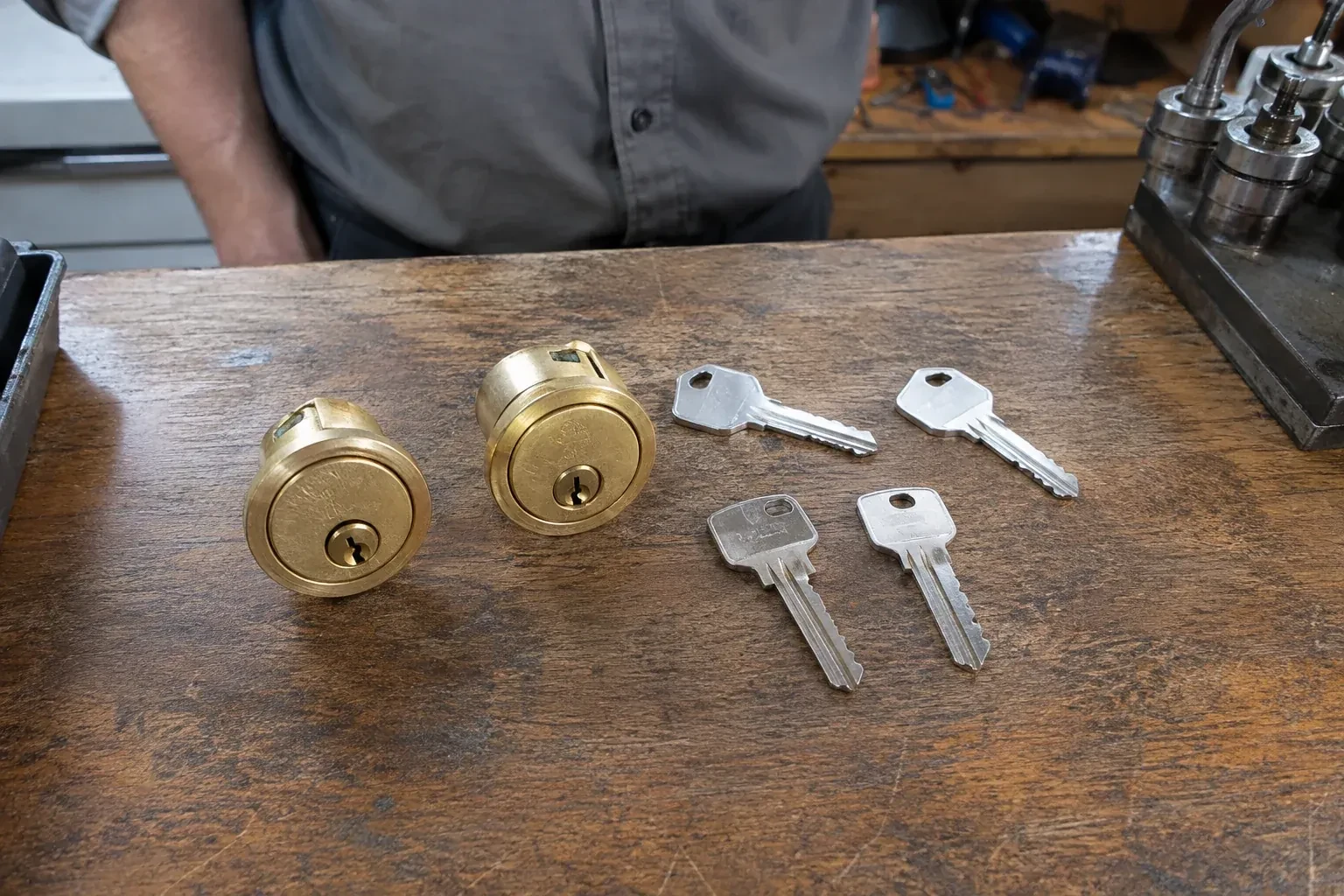
Two detached brass lock cylinders and four house keys on a wooden counter. — Lock Rekeying, Toronto

Change or rekey · Toronto

Lock Rekeying

The builder handed over your new home with a stack of identical keys, and you know the framing crew, the painters and the flooring installers all used a construction key during the build. The doors are brand new, but the key that opens them should be yours…

In plain words

A rekeying visit follows a straightforward order. First the locksmith confirms you are entitled to change the locks, which for an owner is identification and for a tenant includes the landlord's agreement. Next comes a walk around the house to list every door to include, read the keyway on each cylinder and check its condition. The cylinders come out one at a time, are pinned to the new key and go back in. Every door is then tested with the new key and with the old one, spares are cut and tried in each lock, and you receive a note of what was done.

Sound familiar?Toronto

The call
One key for the front door, another for the back, a third for the side door into the garage, and a fourth for the shed. You stand on the step every evening flipping through them in the dark, trying each one until something turns.
NextHow the visit goes

Lock Rekeying · Toronto

How the visit goes

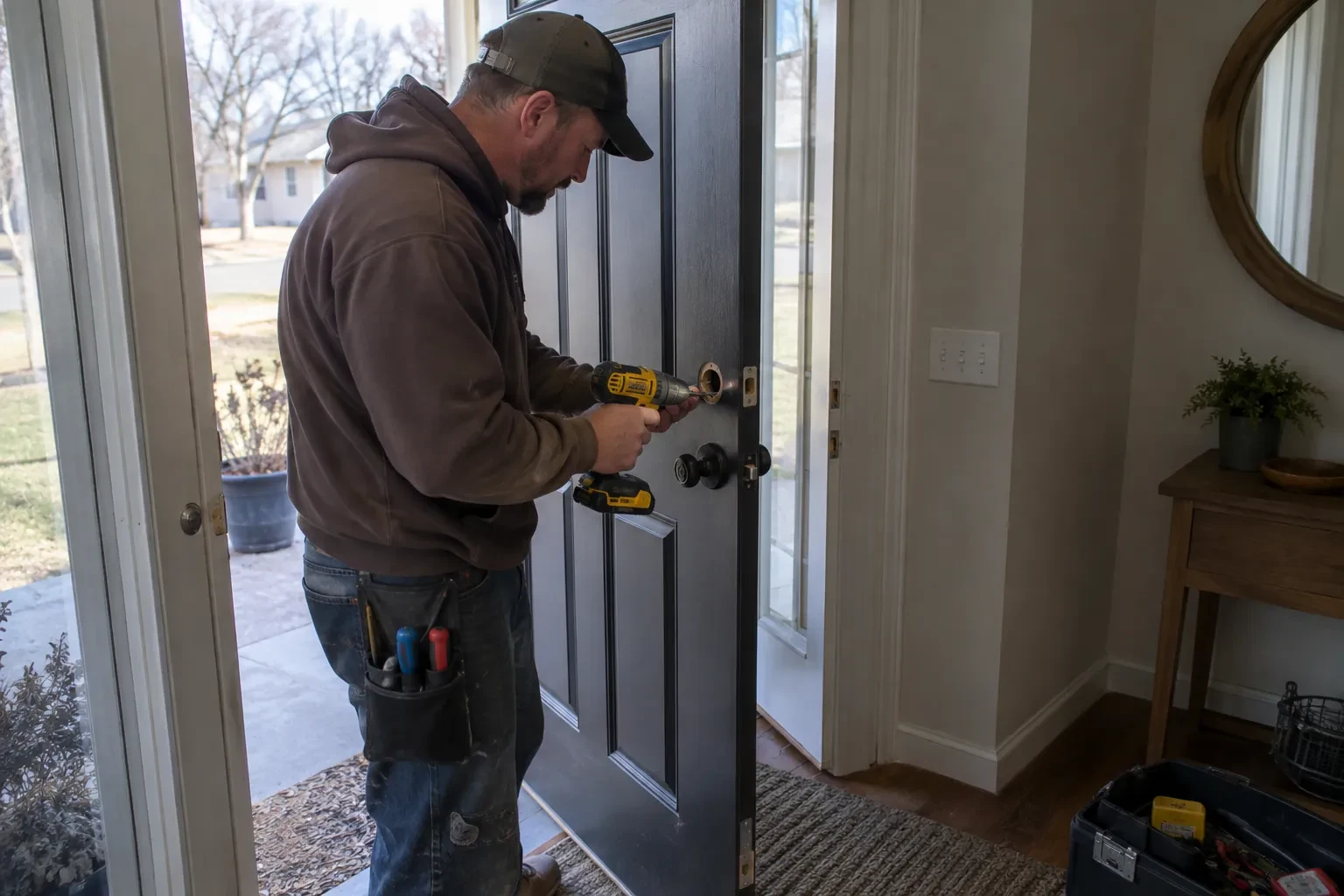
Technician in a cap using a yellow drill at the round bore of a dark door, with a black knob below it.
  1. Scene 1

    Doors that belong to someone else

    A few openings around a home are not the occupant's to change, and sorting them out early avoids awkwardness later. In a condominium, the lobby, the garage, the locker room and the mailroom are the corporation's doors, and the suite door itself may need to remain on a system the building can access in an emergency. In a rental, the landlord has a say and must be given a key. A shared side entrance in a semi-detached or a duplex serves two households. The locksmith asks about each of these, confirms who needs to agree, and keeps them separate from the doors that are plainly yours.

  2. Scene 2

    Sliding the plug and changing the pins

    With the cylinder in hand, the locksmith removes the cam or tailpiece from the back, inserts the existing key and turns the plug slightly so the top pins clear, then pushes a plug follower in behind the plug as it slides out. The follower holds the top pins and springs in the housing so nothing springs loose. The plug now sits on the bench with its row of bottom pins exposed, and those pins are tipped out. This is the heart of rekeying a pin-tumbler cylinder: the pins that decided which key worked are gone, and the plug is ready to receive a set that matches a key nobody has ever carried.

  3. Scene 3

    Looking after a freshly pinned cylinder

    A cylinder that has just been rekeyed turns as smoothly as it ever will, and a little care keeps it that way. Once or twice a year, a puff of whatever lubricant the cylinder maker specifies into the keyway and a few turns of the key is all it needs, since some current cylinders use oil while too much graphite can itself gum a cylinder. When you need more copies, cut them from one of the locksmith's originals rather than from a copy, because each generation drifts a little from the true depths. A key that starts to need a jiggle is the cylinder asking for a clean and a new key, not a sign of anything serious.

In the van

  • Reset tool for user-rekeyable cylinders
  • Pinning tweezers and tray
  • Key tags and keying record
  • Replacement cylinder for odd keyways
  • Key gauge

What shapes the quoteLeaside Lock Experts

Interior doors added to the plan
Bedroom, office or storage-room locks brought onto a key are lighter work than exterior deadbolts, but each is still a cylinder to pin and test, and the count includes them.
Upgrades chosen during the visit
Some people take the opportunity to replace a double-cylinder deadbolt with a thumb-turn model, add a reinforced strike or move to a heavier deadbolt. None of it is needed to rekey; each is a separate line.
Condition of the existing cylinders
A clean cylinder is repinned as it is. One with collapsed springs, a plug packed with old oil or a worn housing needs service or replacement while it is apart, and that shows separately.

FeesSame any hour

Have it ready

Before you call · 0 / 3

(289) 806-8979

Ask us anything about locks

My locks are different brands. Is that a problem?

Not a problem, just a detail to plan around. What matters is the keyway, meaning the profile of the slot the key fits, rather than the name on the lock. Different makers sometimes share a profile and sometimes do not. Where two cylinders cannot accept the same key, one is exchanged for a compatible cylinder in the same finish and pinned to match. From the outside the door looks the same and from your pocket it is one key.

Should I rekey when I move into a new home?

It is the single most common reason to rekey, and a sensible one. A resale home has typically passed through owners, agents, inspectors, cleaners and trades, any of whom may have had a key cut. A newly built home has been opened by construction crews using a builder's key. Rekeying on move-in means the only working keys are yours, and the same visit can bring every exterior door onto a single key, retiring the assorted keys you inherited.

My house is older and has a mortise lock. Can that be rekeyed?

Yes. A mortise lock, the kind with a large case set into the edge of the door, uses a threaded cylinder held by a set screw reached from the door's edge. The cylinder unthreads, is pinned like any other and screws back in. Where a very old lock uses a bit key or a lever mechanism instead of a pin cylinder, the locksmith will explain the options, which may include fitting a modern cylinder into the existing case so the door keeps its original hardware.

Torontoinformation

TorontoOntario

Town
Toronto
In business
34 years
Hours
Open 24/7
Nights, weekends and holidays, same fees
Visits
On-site assessment preferred. Request a visit or call.

2021 census: what it means at the door

Every square is one home in a hundred.

  • 58 in 100 homes · older homes
  • About 58% of homes in Toronto were built in 1980 or earlier, according to the 2021 Census.Decades of seasons move a frame, and an older house often has a front door that locks easily in summer and fights in winter. Setting the strike with the seasons in mind, and choosing a lubricant that stays fluid in the cold, keeps it working year round.
  • Single-detached houses make up about 23% of homes in Toronto (2021 Census).Where housing is mostly apartments and condos, mailbox locks are a regular call. A worn or lost mailbox key is a small job that a locksmith handles alongside the suite door, and the new lock comes with fresh keys cut on the spot.

Source: Statistics Canada, Census Profile

Open Toronto in Google Maps

On-site assessment

Request a visit.

The builder handed over your new home with a stack of identical keys, and you know the framing crew, the painters and the flooring installers all used a construction key during the build.

(289) 806-8979, open 24/7.