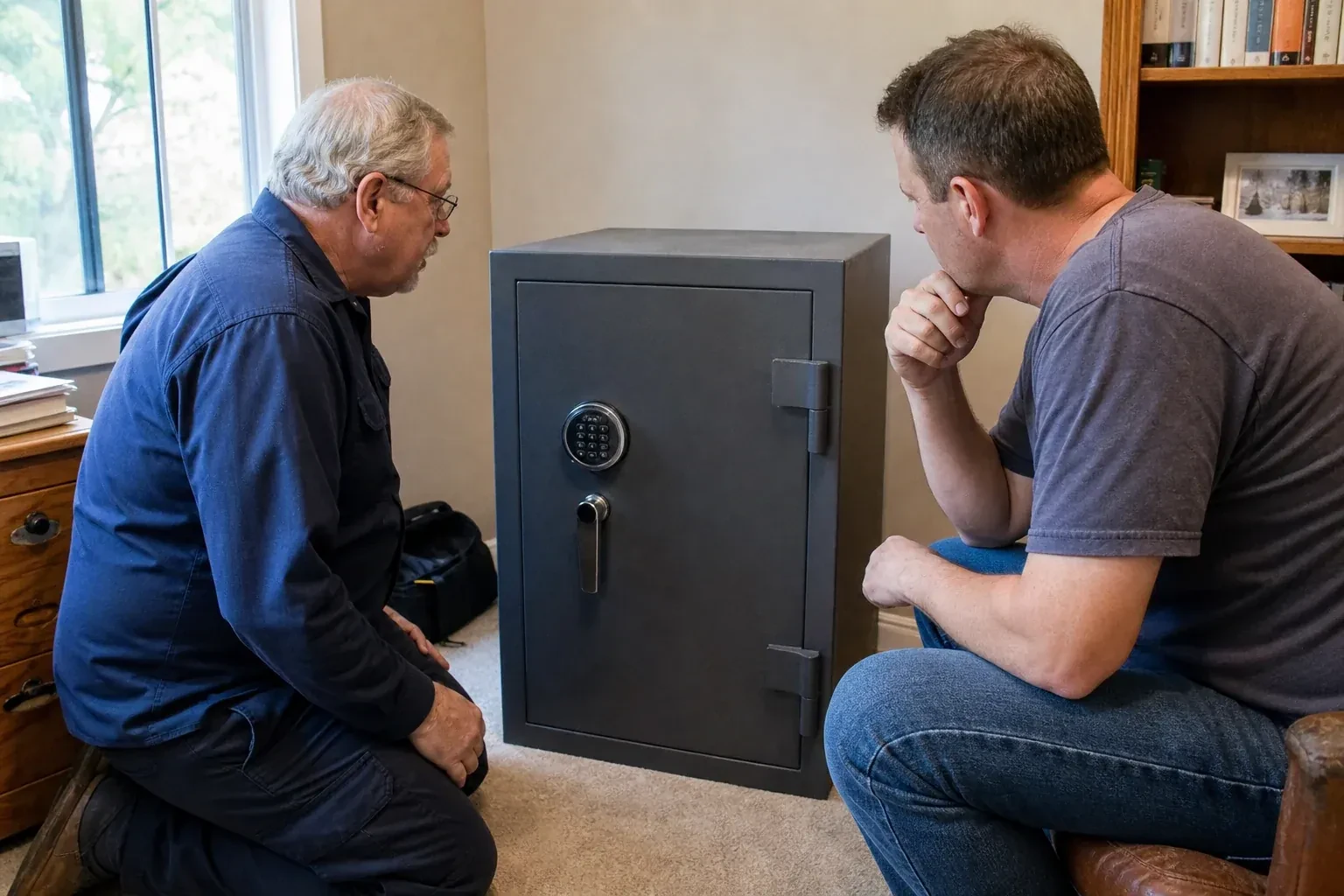
Sound familiar?Toronto
- The call
- Your shop has had four employees leave in two years and each one had a key. Rekeying every time is getting old, and the hardware store will cut a copy for anyone who walks in with the original.
You run a home office with client files and equipment, and your insurer has asked what kind of lock is on the door. The honest answer is the builder's knob lock and a light deadbolt from when the house was new.
Think of the upgrade as four layers working together. The cylinder resists picking, bumping and drilling. The deadbolt resists sawing and kicking with a long, hardened bolt. The strike and screws keep the frame from splitting when the door is struck. And the key control stops copies being made without your say-so. A locksmith assesses your door for each layer and tells you where it is weak, because a strong cylinder screwed into a soft frame gains you little. Most homes end up with a graded deadbolt and a patented cylinder; businesses often step up to laboratory-rated cylinders and heavier lock bodies.
Sound familiar?Toronto
High Security Locks · Toronto
Scene 1
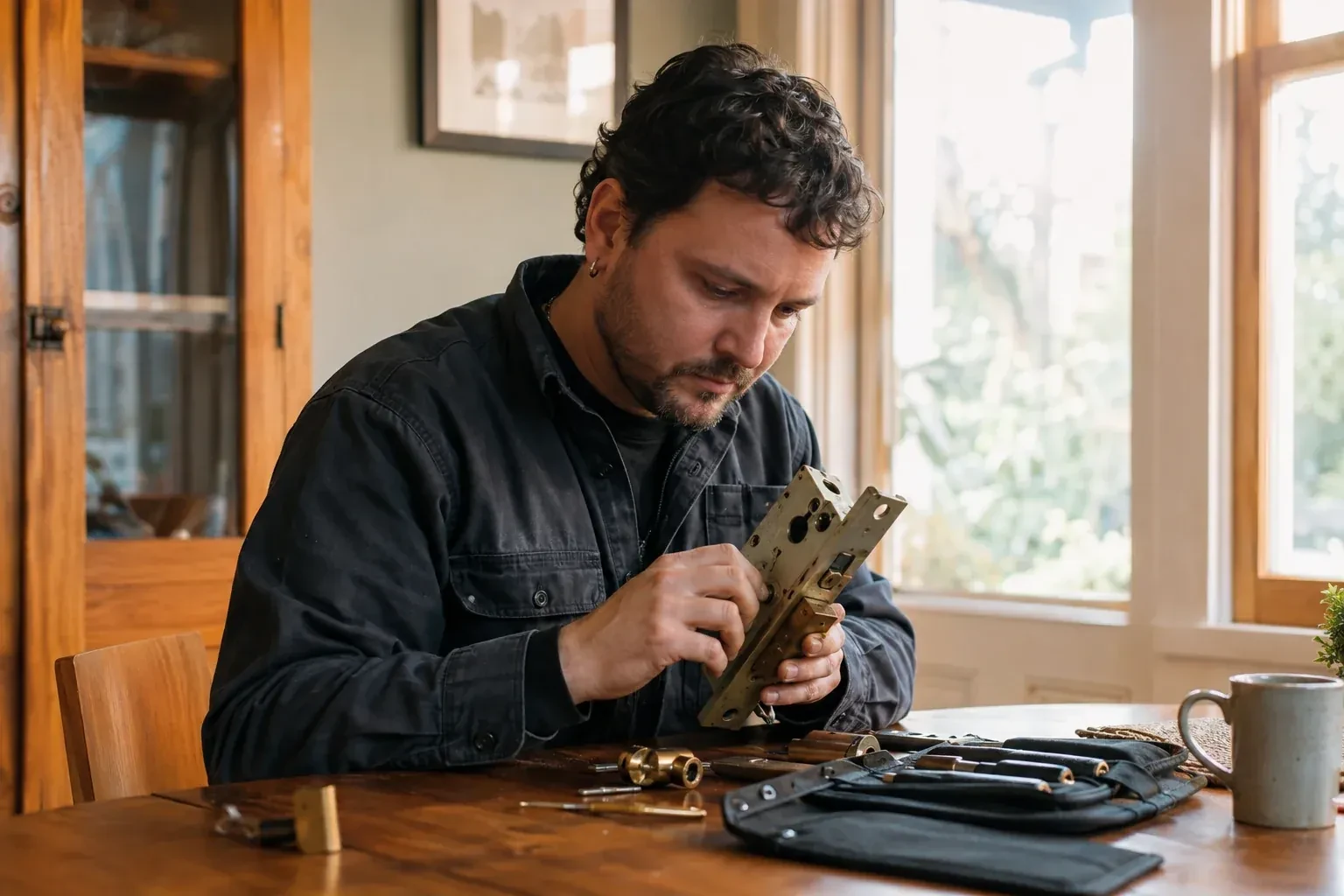
The door itself is inspected as part of the lock. Hollow-core doors, thin panels beside the lock, and hinge screws that barely bite into the frame all undo the value of a strong cylinder. The locksmith checks how the door hangs, whether it drags or needs a shoulder to close, and whether the hinges are on the secure side. Glass close to the lock is noted, because a hand through a broken sidelight can reach an inside thumb-turn. None of this rules out an upgrade; it shows which supporting pieces belong in the plan so the whole opening is brought up together.
Scene 2
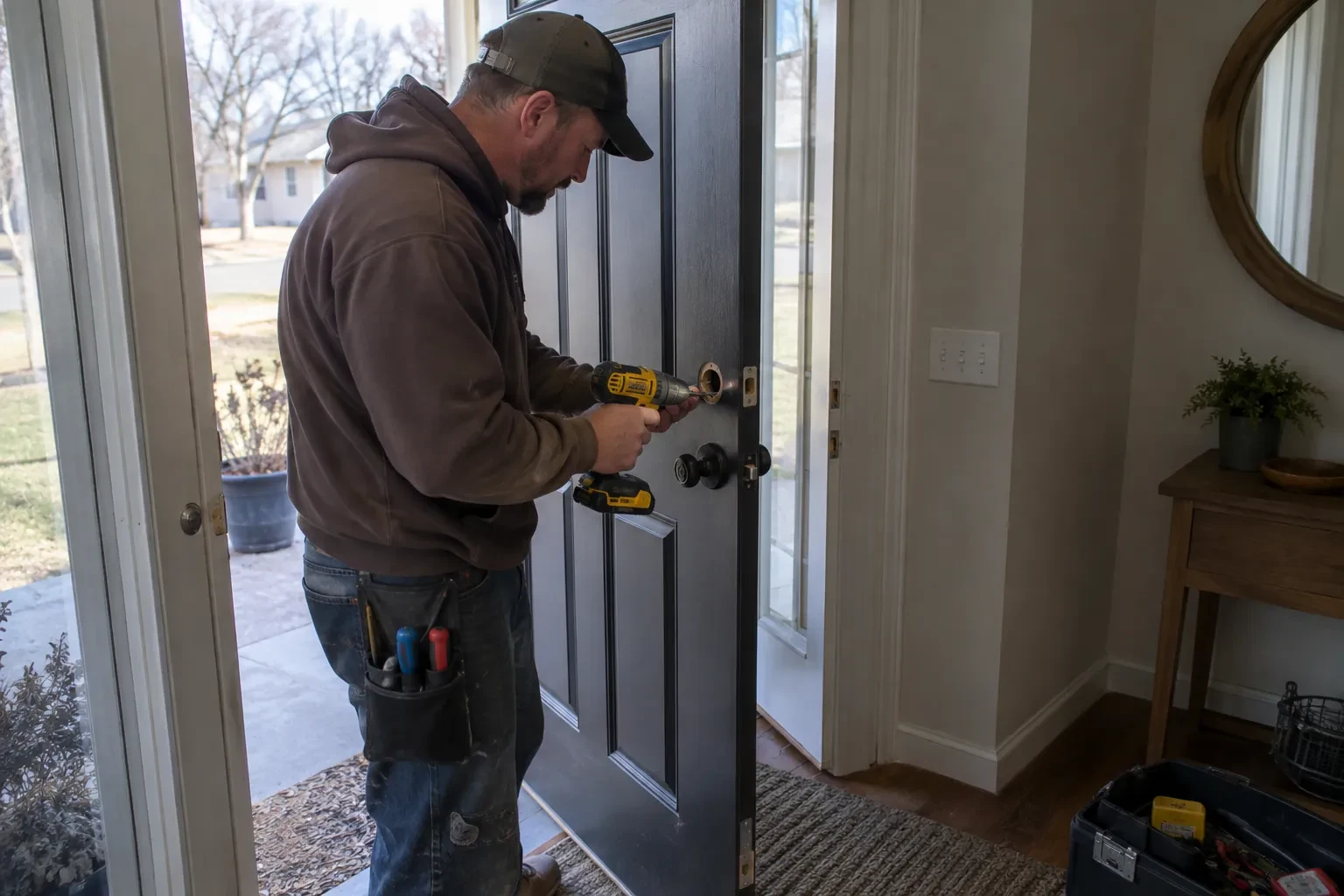
The finish is a methodical test. Every key is cycled in every lock from both sides, with the door open and then closed and latched. The bolt is watched entering the strike pocket to confirm it throws fully and does not drag. The door is pushed and pulled while locked to feel for play at the strike or hinges. Cylinders receive a dry lubricant approved for their mechanism. Then the locksmith walks you through the operation, the key control documents and the record of hardware fitted, so you know both how to use the door and how to order the next key.
Scene 3
For a business, the handover includes a key schedule showing every cylinder, every key number and who holds it. When someone leaves, their key comes back and is struck off; if it does not come back, you know exactly which doors it opened and can decide whether one cylinder or several should be repinned. Because the keyway is restricted, a departed employee cannot quietly keep a copy. New hires are issued a numbered key against a signature. The plan lives in a folder or spreadsheet, and the locksmith keeps a matching record so the two can be reconciled whenever you like.
What shapes the quoteLeaside Lock Experts
FeesSame any hour
Locks and deadbolts are tested against industry standards for security, durability and finish. Commercial hardware is graded 1, 2 or 3 with grade 1 the highest. Residential hardware carries a letter label for each of the three categories, from C for good through B to A for the top level. Security tests include hammer blows and pulling on the lock; durability covers cycle life and seasonal misalignment; finish covers salt, humidity and scratching. Your locksmith translates the label for your door.
Start with the doors that matter and the ones that are weakest, which are often not the same. Front doors usually carry the sturdiest hardware already; the side door by the driveway, the door from the garage and the basement walkout often carry the lightest locks and get the least attention. The assessment walks the whole perimeter with you so the upgrade goes where entry is most likely, and the remaining doors can join the same key later.
The locksmith confirms that the person ordering the work is entitled to change the locks: the owner, a tenant with the landlord's agreement, or a property or facilities manager for a business. Photo identification and something linking you to the address usually settle it, and for a company a letter or a call to the named contact does the same. It protects you as much as anyone, since the same check stops someone else from changing your locks.
TorontoOntario
High Security Locks · Flemingdon Park, Leaside, Parkview Hill, Thorncliffe, Woodbine Heights
Every square is one home in a hundred.
On-site assessment
You run a home office with client files and equipment, and your insurer has asked what kind of lock is on the door.
(289) 806-8979, open 24/7.
On-site assessment preferred · (289) 806-8979, open 24/7