Skip to content
LeasideLock ExpertsOpen 24/7 (289) 806-8979
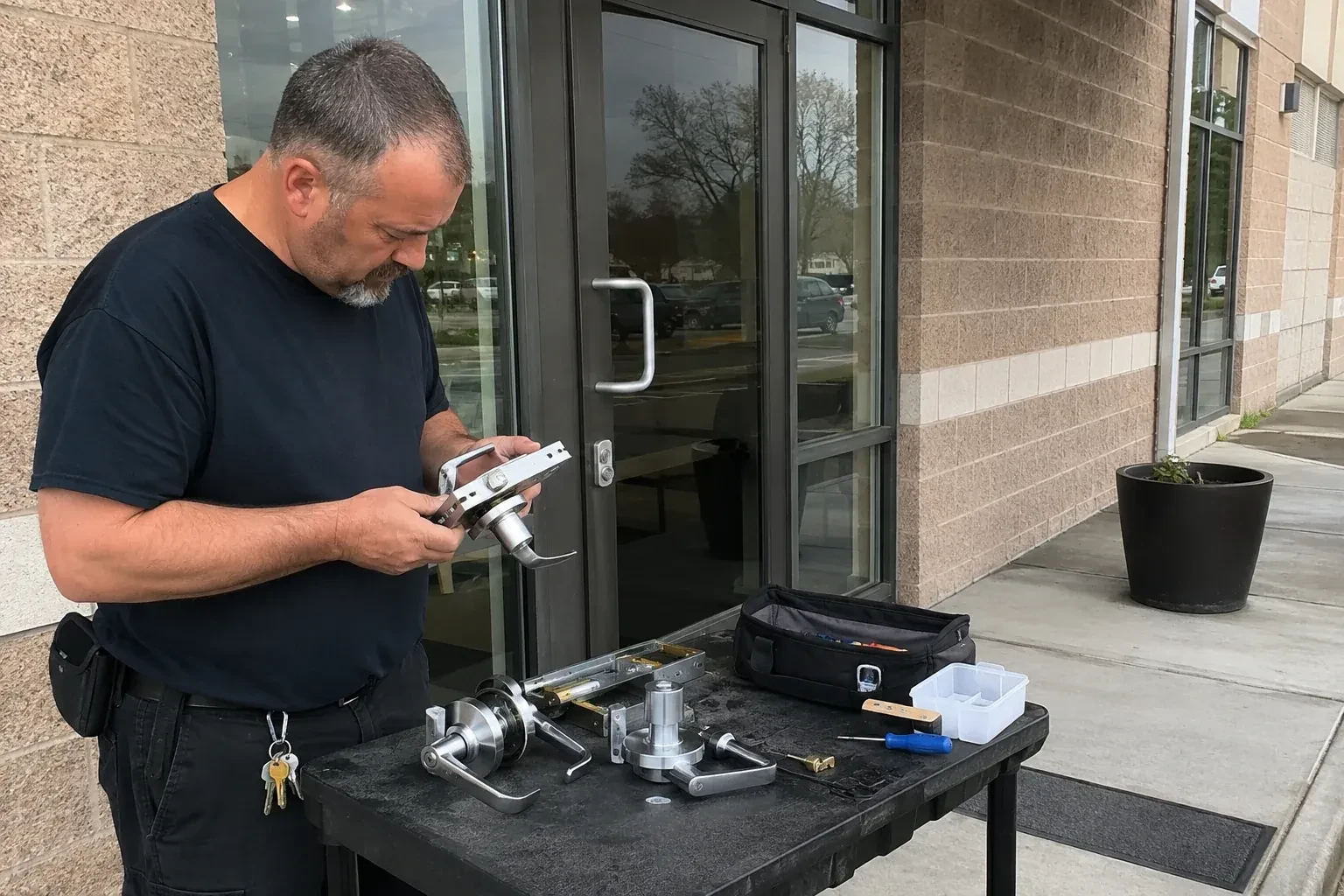
Person holding a door-handle and latch assembly at a worktable outside a glass entrance, with additional handles and tools laid out. — Commercial Rekeying, Toronto

Commercial · Toronto

Commercial Rekeying

A key turned up in the parking lot with the shop's name on its fob. It came back to you, which is lucky, but it means keys are leaving the building on rings you have never seen, and the shop's locks have not changed since opening day.

In plain words

Rekeying is also a chance to decide how the keys should work, not simply to change them. Most businesses settle on a small number of key groups: one key for the doors every employee uses, another for the office, cash room or server closet that only managers open, and perhaps a single master for the owner that opens everything. The locksmith maps this out on a keying chart before touching a cylinder, then pins each lock so the plan holds true on the door. Staff carry one key instead of a ring, managers carry two, and the chart tells you at a glance who can open what.

Sound familiar?Toronto

The call
Two people left over the summer and the keys they handed back came up one short. Nobody is sure whether the missing key was for the front door, the stockroom or both, and the sign-out sheet stopped being filled in a year ago.
NextHow the visit goes

Commercial Rekeying · Toronto

How the visit goes

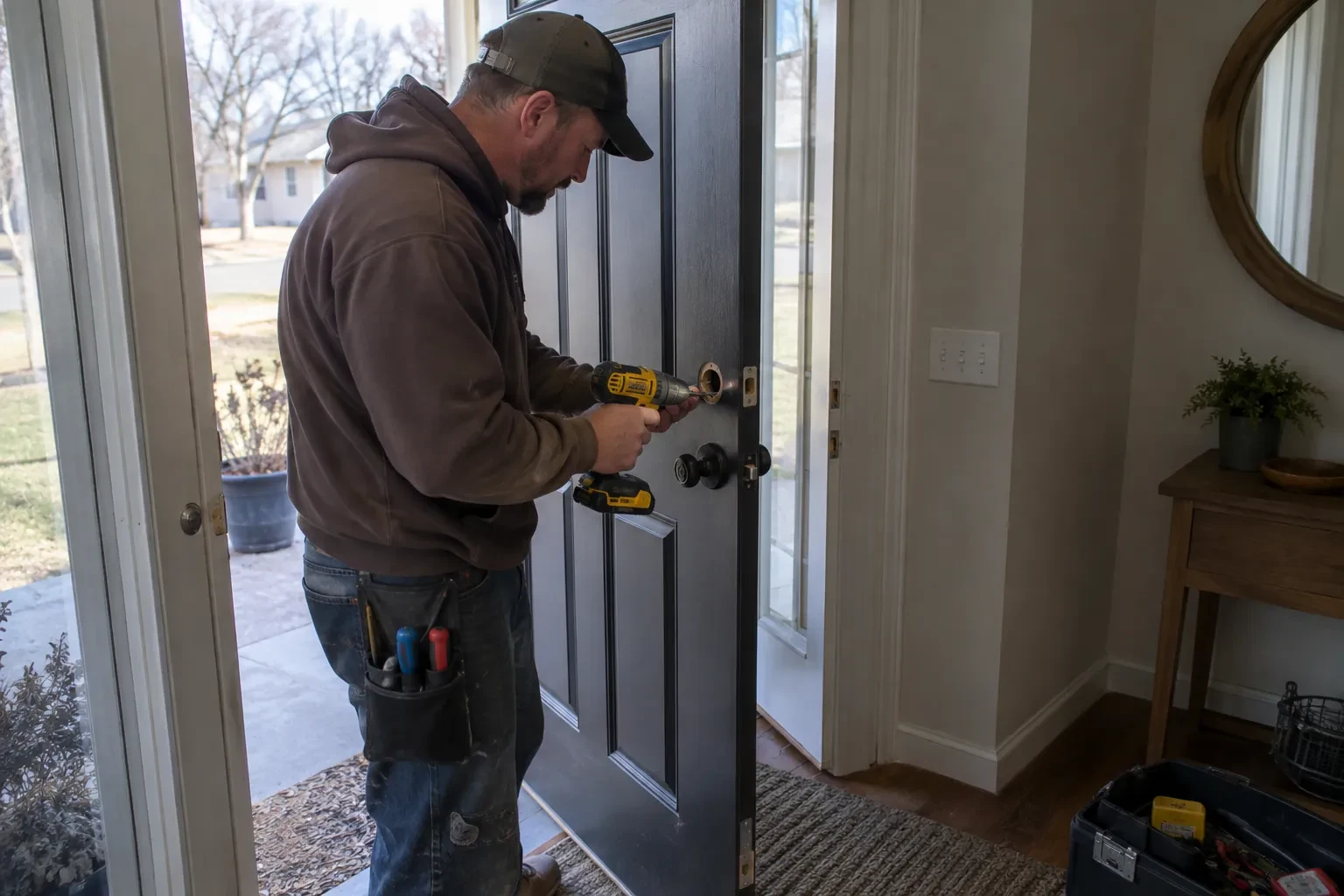
Technician in a cap using a yellow drill at the round bore of a dark door, with a black knob below it.
  1. Scene 1

    Cores and restricted keys already on site

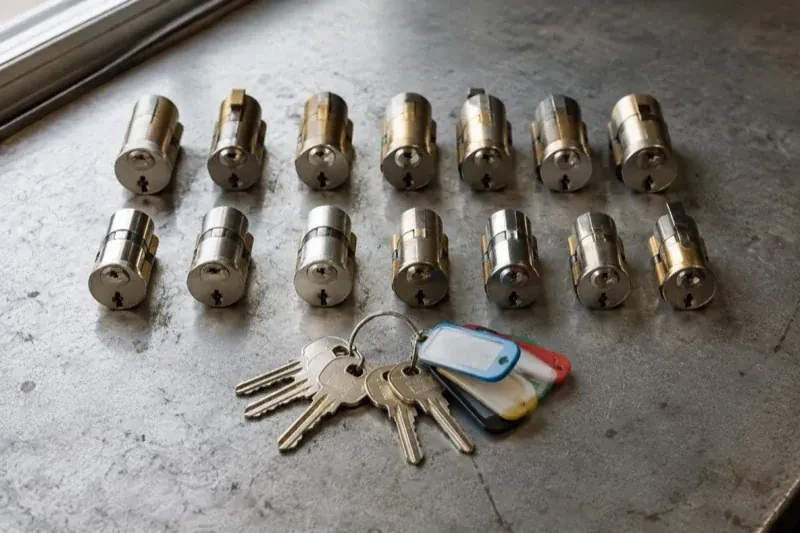
    Some businesses already have more key control than they realize. Figure-eight shaped cores in the levers point to an interchangeable core system, which means a control key somewhere removes the core without unscrewing anything; finding out who holds that control key, or whether it left with a former manager, shapes the whole job. Keys with an unusual profile or a stamped number may belong to a restricted keyway whose blanks are only supplied against a signed letter of authorization, and the locksmith asks who the signatories are. Knowing what is already in place lets the new plan build on it rather than replace it, and flags any control that has quietly lapsed.

  2. Scene 2

    Pinning the master and change keys

    When the plan includes a master, each cylinder is pinned to accept two keys: its own change key and the master above it. Thin master pins sit in the pin stacks so the plug can turn at both the change key's height and the master's; master keying can also create extra, unintended combinations, so the locksmith charts the system to keep those from lining up with someone else's key, and the manager's key opens its whole group and nothing beyond it. A well-built system leaves unused combinations in reserve, so when the business adds a door or a department next year the new cylinder joins the plan without disturbing the keys already in people's pockets.

  3. Scene 3

    Telling the landlord and the alarm company

    A rekey touches a few people outside the business, and the handover covers them. If the lease asks for it, the landlord or property manager receives a key to the suite entrance and a note that the locks were changed, which keeps you onside for emergencies and inspections. The alarm monitoring company is given the updated keyholder list, and it is a good moment to change the alarm codes of anyone who no longer works there, since a key and a code usually leave together. Cleaners, the courier with after-hours access and the neighbour who watches the place on holidays each collect their new key against the register like everyone else.

In the van

  • Code key machine
  • Mortise cylinder set screws and cams
  • Plug follower
  • Key stamp set and tags
  • Rekeyable padlocks

What shapes the quoteLeaside Lock Experts

Several locations
Rekeying two or three sites onto one keying plan means travel between them and a chart that spans buildings, quoted per site plus the shared design work.
Number of cylinders
The count of openings drives the quote more than anything else: each cylinder is removed, repinned, refitted and tested individually, so a three-door shop and a twelve-office suite are very different jobs.
Restricted keyway
Moving to a patented, restricted keyway means new cylinders or cores rather than a repin of the old ones, and the blanks themselves carry a higher price than standard keys.

FeesSame any hour

Have it ready

Before you call · 0 / 3

(289) 806-8979

Ask us anything about locks

What information should I have ready before the locksmith arrives?

A list of the doors and other locks you want included, a copy of the lease or the property manager's contact, every existing key you can find, and a rough idea of who needs to open what. Note which doors, if any, are interchangeable cores and where the control key is. Knowing your quiet hours and who opens up in the morning helps the locksmith plan the order of work and the key handover.

Will rekeying affect our alarm system or card readers?

Mechanical rekeying leaves electronics alone: alarm panels, card readers and keypads keep their codes and credentials. What changes is the list of people holding keys, and it is worth updating the alarm company's keyholder list and retiring the codes of anyone who has left at the same time, since keys and codes usually walk out together. Where a door has both a card reader and a keyed override, the override cylinder is rekeyed with the rest.

Can the aluminum storefront door on our unit be rekeyed?

Yes. The narrow stile of a storefront door houses a screw-in mortise cylinder secured from the edge, and it unthreads, is repinned and screws back in like any other. What the locksmith watches is the cam: it has to suit the hook or deadbolt mechanism inside the door and sit at the correct depth, or the bolt throws short. Weather-facing cylinders showing salt wear are pointed out so you can decide on replacement.

Torontoinformation

TorontoOntario

Town
Toronto
In business
34 years
Hours
Open 24/7
Nights, weekends and holidays, same fees
Visits
On-site assessment preferred. Request a visit or call.

2021 census: what it means at the door

Every square is one home in a hundred.

  • 58 in 100 homes · older homes
  • About 58% of homes in Toronto were built in 1980 or earlier, according to the 2021 Census.Decades of seasons move a frame, and an older house often has a front door that locks easily in summer and fights in winter. Setting the strike with the seasons in mind, and choosing a lubricant that stays fluid in the cold, keeps it working year round.
  • Single-detached houses make up about 23% of homes in Toronto (2021 Census).Where housing is mostly apartments and condos, mailbox locks are a regular call. A worn or lost mailbox key is a small job that a locksmith handles alongside the suite door, and the new lock comes with fresh keys cut on the spot.

Source: Statistics Canada, Census Profile

Open Toronto in Google Maps

On-site assessment

Request a visit.

A key turned up in the parking lot with the shop's name on its fob.

(289) 806-8979, open 24/7.