Sound familiar?Toronto
- The call
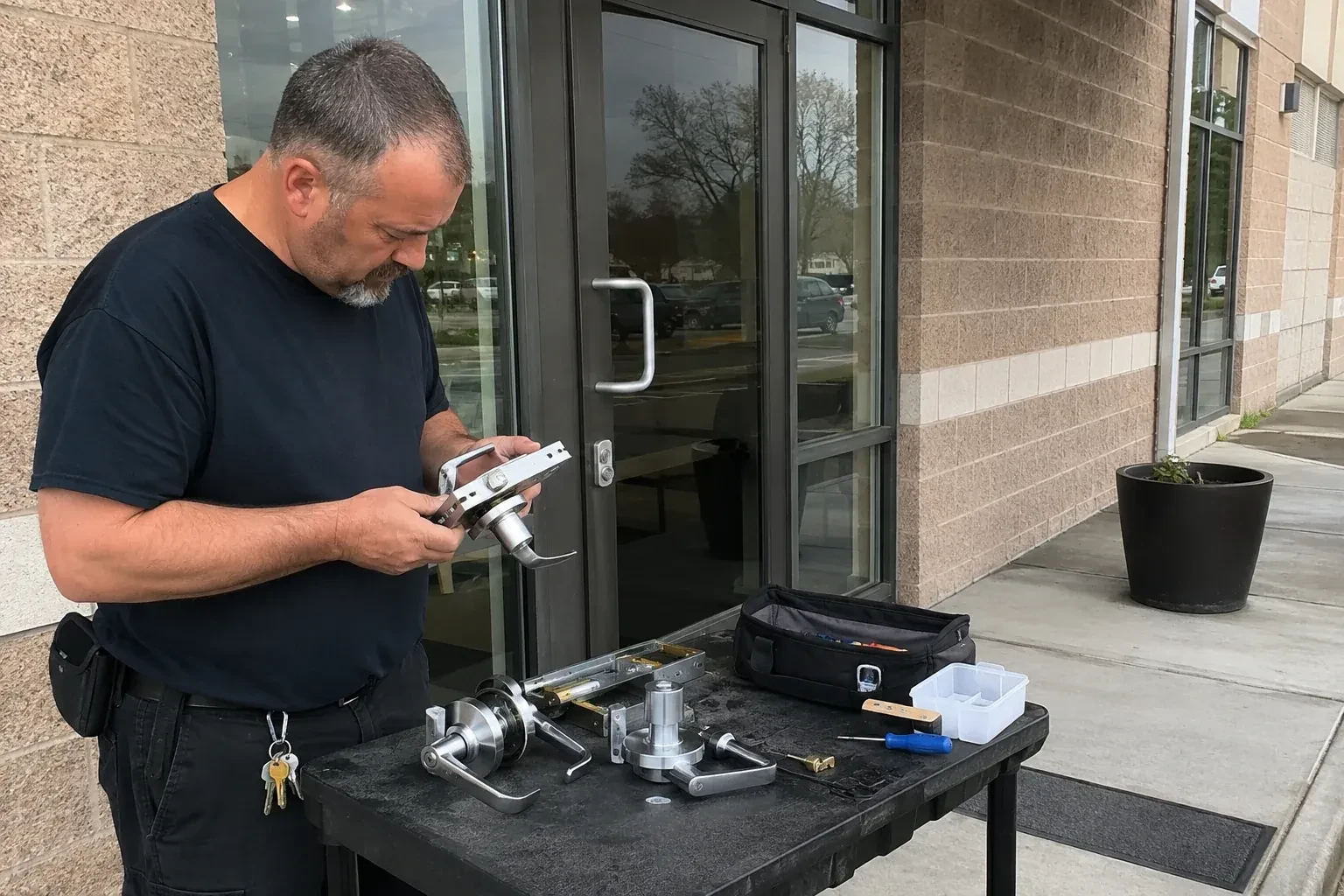
- Deliveries arrive before anyone is scheduled to be there, which right now means either propping the loading dock open at dawn or handing a key to a driver you have never met.
The back door of the shop runs on one key, and by now it lives on six different rings: yours, two managers, a cleaner, a supplier who restocks early, and a keyholder nobody quite remembers approving.
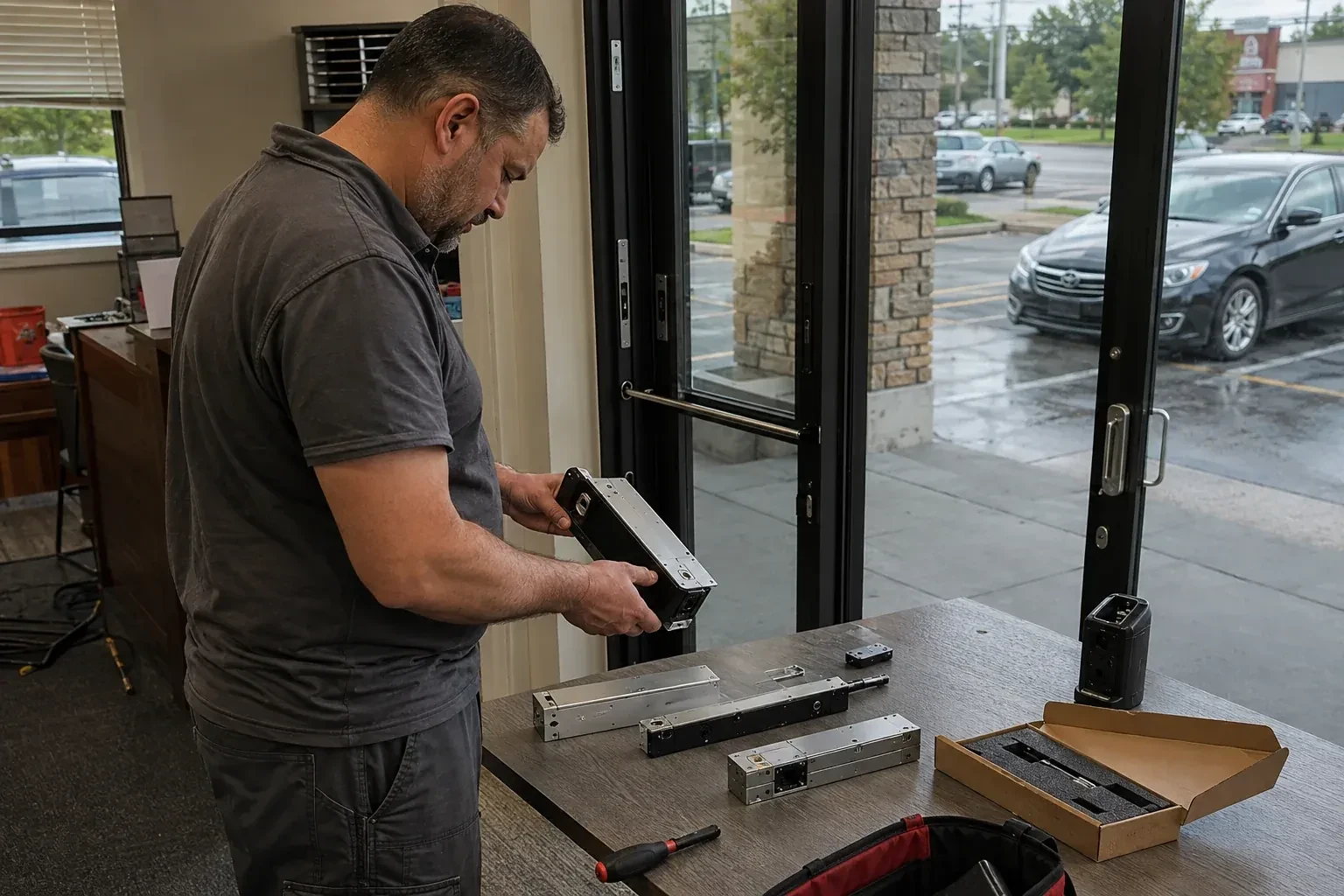
Locking hardware varies by opening: an electric strike, fitted into the existing frame, keeps the mechanical latch and releases it briefly for a valid credential; a magnetic lock clamps the door shut with an electromagnet and suits a frame or door that will not take a strike; and some openings use an electromechanical lock or a different controlled lockset entirely. Several of these can also be fitted with a mechanical override cylinder, so a lost signal, a dead battery, or a controller fault still leaves that particular door opening by key, though the option depends on the hardware chosen for it.
Sound familiar?Toronto
Access Control Installation · Toronto
Scene 1
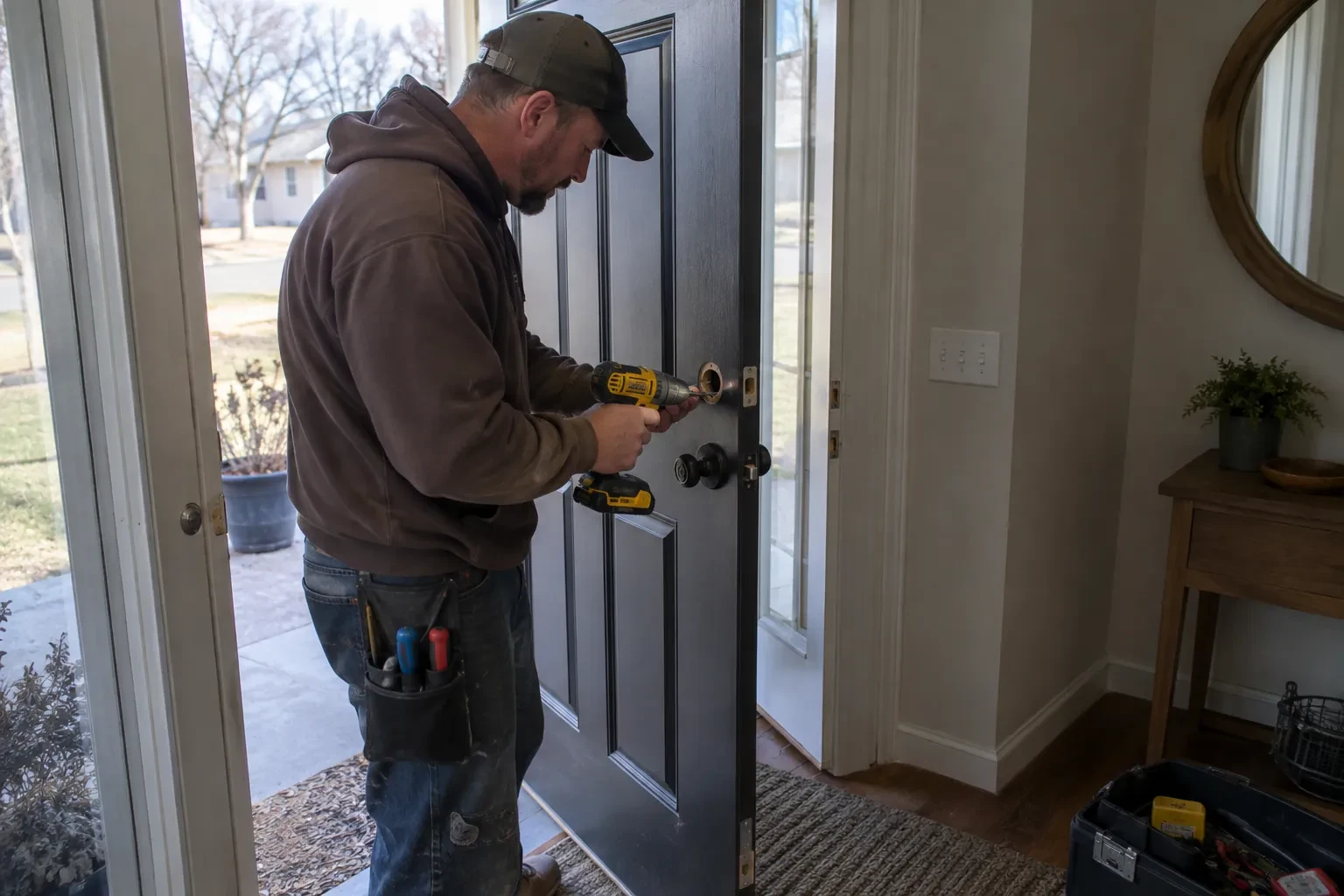
An access control system needs somewhere for its low-voltage wiring to run and somewhere secure for the controller and its power supply to sit, away from public reach. The survey traces a path from each opening back to that location, checks whether existing conduit or cable trays can be reused, and confirms what power is already available against what a new circuit or a battery backup needs to supply. A building with exposed ceilings or accessible risers is a simpler pull than one with finished walls throughout, and that difference shapes how the installation is sequenced.
Scene 2
With the wiring finished, the work moves to the controller's software: schedules for regular business hours, another schedule for a loading dock or an after-hours cleaning crew, and access levels that group doors by who is allowed through them. A manager's credential might sit in every access level, while a new hire's sits in only the one or two the role actually needs. Holidays are entered so a schedule does not unlock a door on a day the building is closed, and the whole configuration is saved before any credential is issued against it.
Scene 3
A controlled door depends on power reaching the controller, the lock, and the reader, so battery backup is worth specifying and sizing for that opening rather than assumed to come standard, so a short outage does not leave anyone locked out or, on a fire-alarm-tied opening, locked in. That backup, where fitted, is worth checking periodically, along with the request-to-exit device on any magnetic lock, since both need attention between visits; a fail-secure lock can stay locked from the secure side once power is gone even where people can still leave freely. A short test, a few times a year, catches a fading battery early.
What shapes the quoteLeaside Lock Experts
FeesSame any hour
A standalone unit is a self-contained reader and lock at one door, holding its own list of credentials, though it can still need a power or network connection to run. A networked system ties several doors to shared management, sometimes through more than one controller, aggregating schedules and combining logs across all of them. The right choice depends on how many doors need controlling and whether the business wants a single place to manage all of them, rather than one being universally better.
It helps to know which doors should be controlled, roughly how many people will need a credential, whether any of those doors are also fire exits, and who in the business will administer the system afterward. A floor plan or a walk-through on site fills in anything easier to show than describe, and neither is required in advance.
It is switched off in the software the moment it is reported, which stops that specific card or fob from working at any door it used to open. A new one is issued and enrolled in its place. No lock has to be changed and no other credential in the building is affected, which is the main advantage a lost fob has over a lost mechanical key.
TorontoOntario
Access Control Installation · Flemingdon Park, Leaside, Parkview Hill, Thorncliffe, Woodbine Heights
Every square is one home in a hundred.
On-site assessment
The back door of the shop runs on one key, and by now it lives on six different rings: yours, two managers, a cleaner, a supplier who restocks early, and a keyholder nobody quite remembers approving.
(289) 806-8979, open 24/7.
On-site assessment preferred · (289) 806-8979, open 24/7