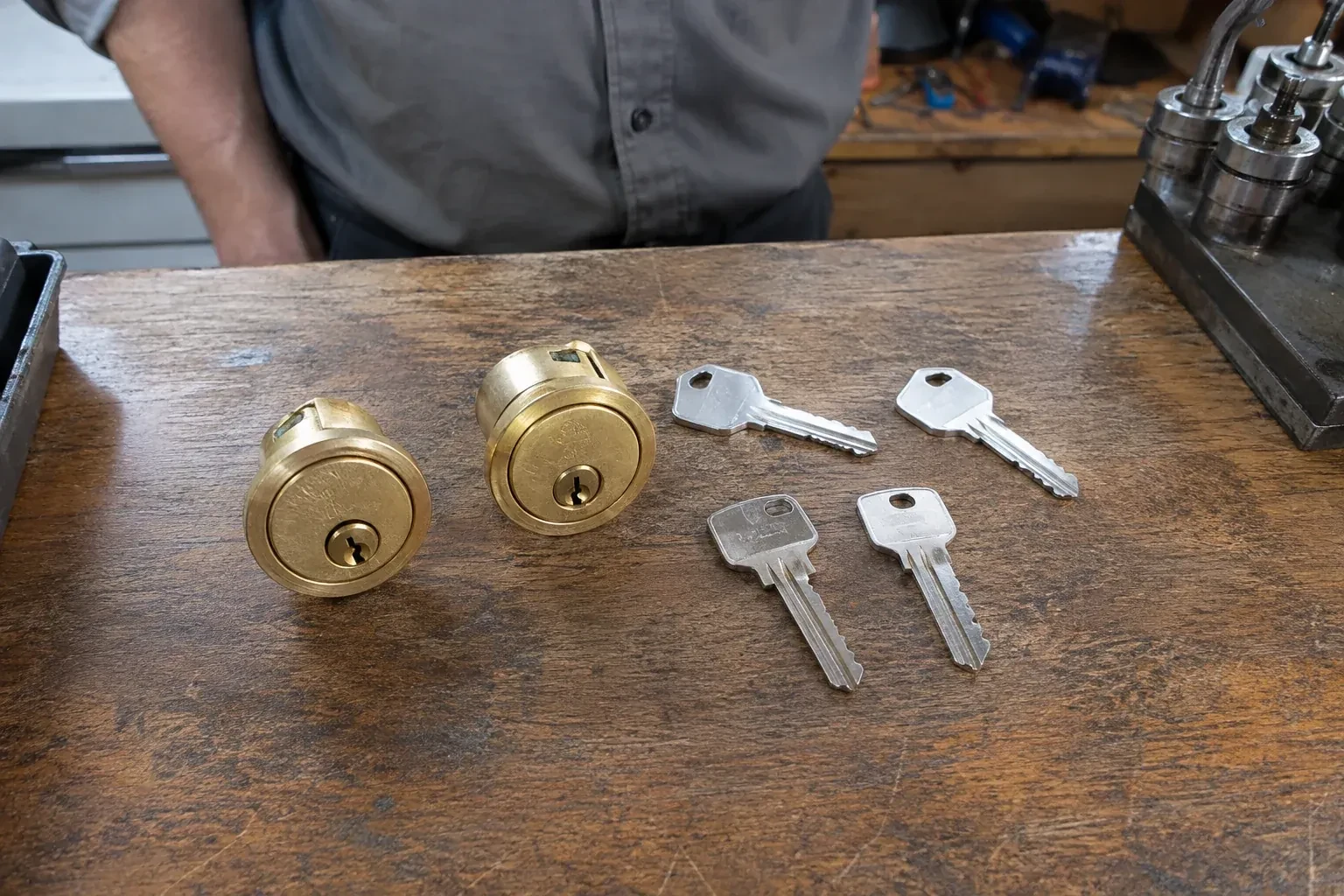
Sound familiar?Toronto
- The call
- The mail slot on the shop's exterior wall has a small compartment lock that a former employee still has a key to, months after they left. Nobody on staff can say with any confidence who else might hold a copy.
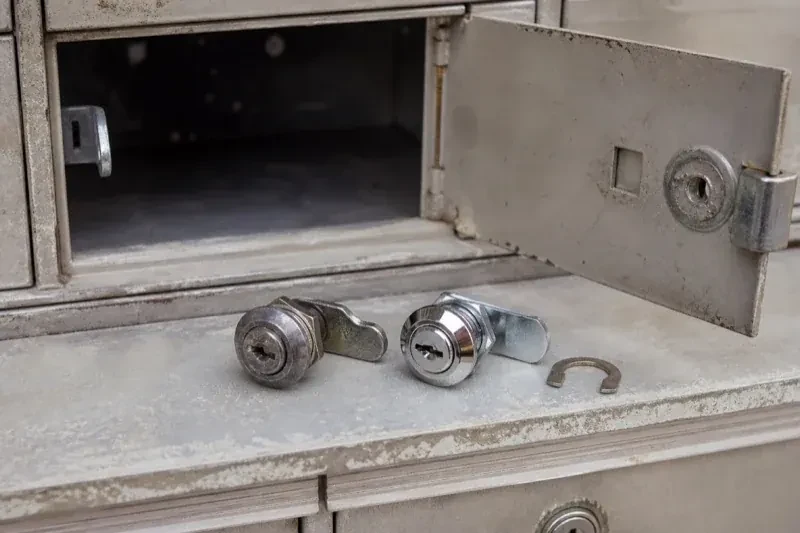
The key still turns, but lately it spins a half-circle further than it used to before the little door lets go, and some mornings it takes a second try. The small cam lock inside is simply worn out.
A mailbox lock lives or dies by a handful of measurements: the cylinder's length, its diameter, and the reach and angle of the cam arm that actually catches the door frame when the key turns. Getting a replacement that matches these numbers is most of the job, since a lock that is almost right will bind, sit loose, or fail to latch properly. The visit starts with a tape measure and the old hardware in hand, well before any new lock is chosen.
Sound familiar?Toronto
Mailbox Lock Replacement · Toronto
Scene 1
A lock rarely fails entirely on its own; the door around it plays a part too. The locksmith checks whether the little door still sits square in its opening, whether a hinge has loosened, and whether a previous attempt to pry it open has left the metal bent or the latch misaligned. A compartment door that no longer closes flush will resist even a brand new lock, so any bend or looseness found here is dealt with alongside the lock itself rather than left for another visit.
Scene 2
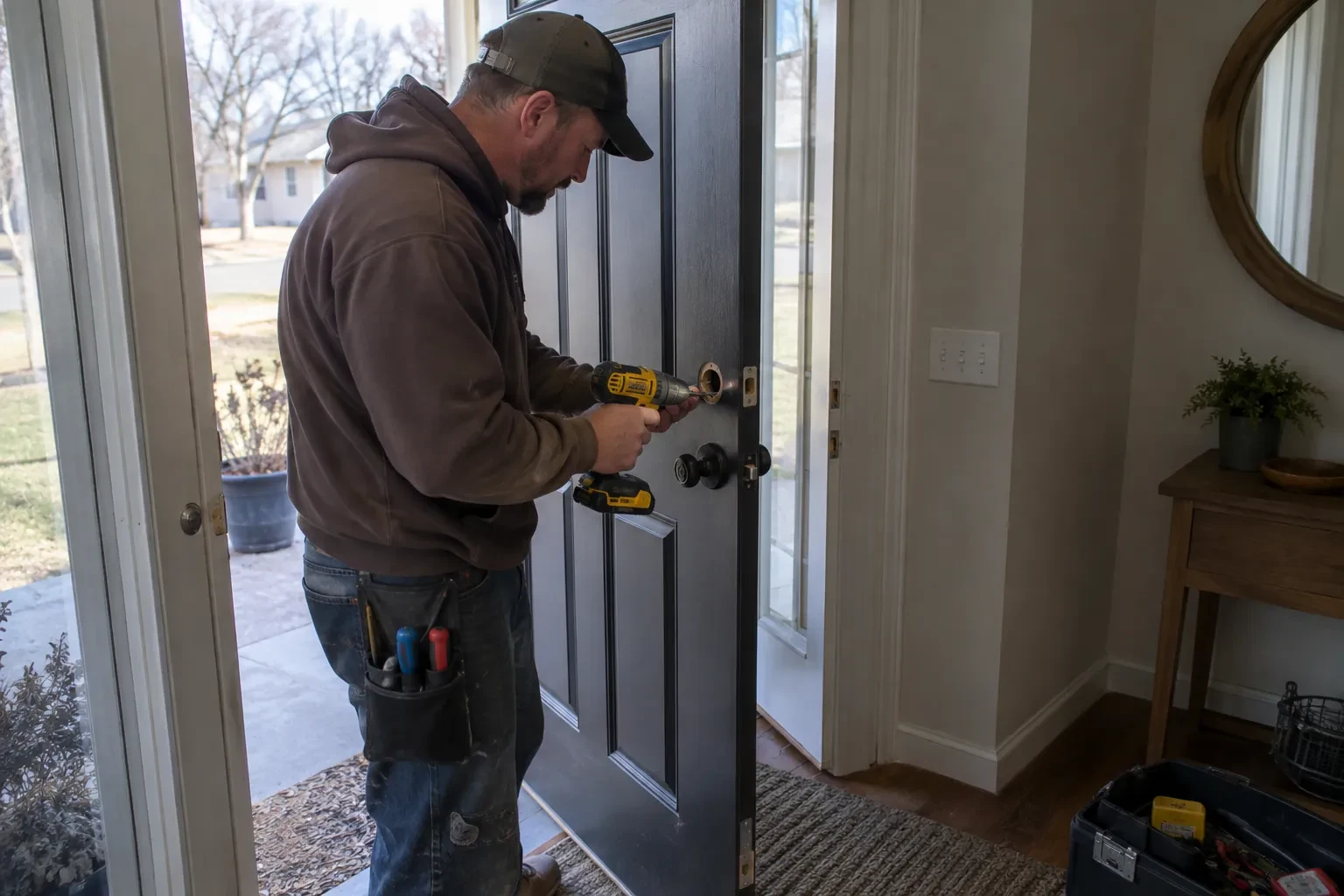
With the compartment door open, the old lock is usually removed from the inside: a retaining nut is unscrewed with a small wrench or nut driver, or a spring clip is pressed free, and the whole cylinder and cam lift out as one piece. When the compartment cannot be opened this way because the key is lost, snapped, or simply unknown, picking or decoding is tried first, and the lock is drilled only when that is not practical, aimed precisely at the wafers so the plug turns and the housing releases without damaging the door around it. Either route ends the same way, with an open hole ready for the matched replacement.
Scene 3
After this visit, it helps to remember which kind of mailbox is on the property. A private box, a house's mail slot, or one compartment in a building's own panel is this service's territory going forward. A mailbox serving a whole street belongs to the postal operator, which issues its own replacement keys and handles its own lock problems directly, so a future issue with that kind of box is a call to them rather than a repeat visit here.
What shapes the quoteLeaside Lock Experts
FeesSame any hour
Yes, and it takes only a moment. For a house or a standalone box, an address match usually settles it. For one compartment in a shared building panel, a lease, a deed, a unit number matching the building's own records, or confirmation from the property manager does the job. This step protects every household on the same panel, including whoever calls next.
You generally do not need to; identifying the hardware is part of the visit. The locksmith reads the maker's mark on the lock face, measures the cylinder and cam, and checks the hole pattern in the compartment door, which together point to a matching replacement even when the original brand is no longer sold.
The old cylinder is removed and handed to you or taken away, whichever you prefer, and any key still floating around no longer fits anything once the new lock is seated. If the old lock was drilled out, the leftover pieces are shown to you so it is clear what was removed and why.
TorontoOntario
Mailbox Lock Replacement · Flemingdon Park, Leaside, Parkview Hill, Thorncliffe, Woodbine Heights
Every square is one home in a hundred.
On-site assessment
The key still turns, but lately it spins a half-circle further than it used to before the little door lets go, and some mornings it takes a second try.
(289) 806-8979, open 24/7.
On-site assessment preferred · (289) 806-8979, open 24/7