Sound familiar?Toronto
- The call
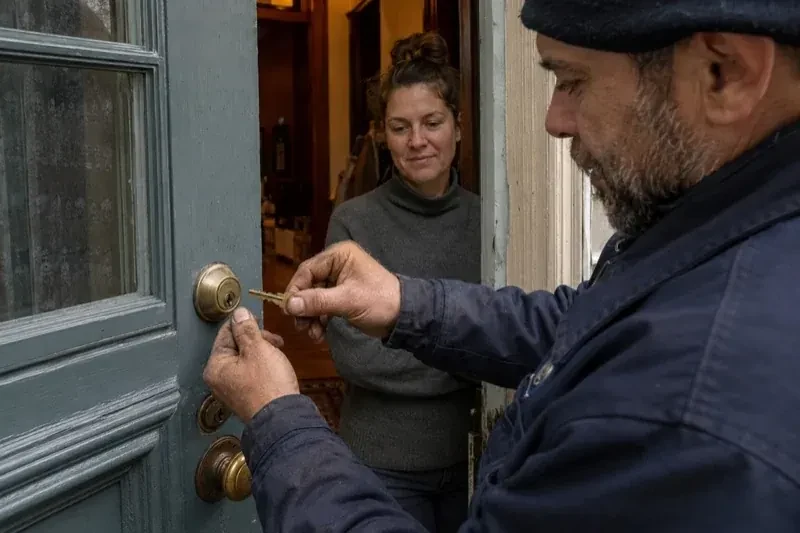
- The old mortise lock on the front door of the house turns the key halfway and stops with a dull clunk. It has been getting harder for months, and the brass key is starting to show a bend.
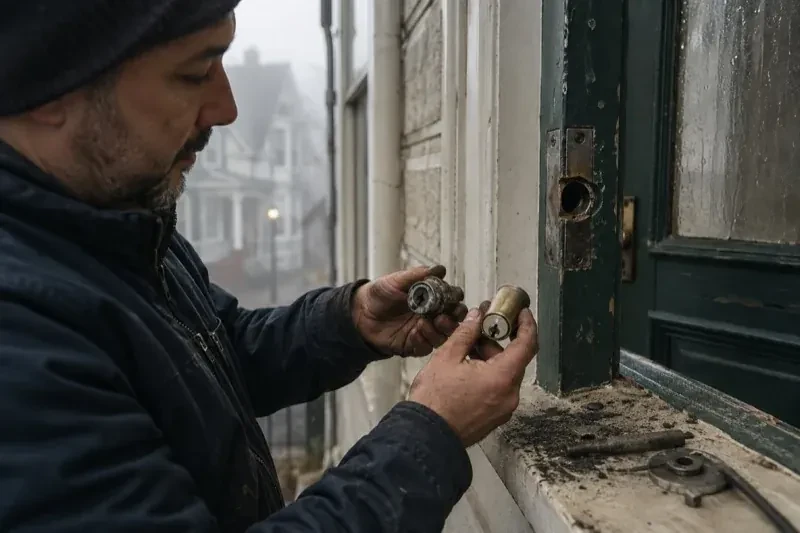
The lock works, but only if you lean on the door with your hip while turning the key. After a week of humid weather the bolt is jammed against the strike plate, and without that push the key stops halfway.
A jammed lock looks like one problem from outside and is usually one of three inside. The cylinder itself may have seized, packed with grit, corrosion or old grease. The link between cylinder and bolt, the tailpiece or cam, may have broken, which is why a key can spin without doing anything. Or the lock may be healthy and the bolt simply pinned against the strike by a door that has moved. Seized and jammed lock opening starts by telling those apart, because the right answer for one would damage the hardware in another. Once the culprit is known, the door is opened and the cause is repaired.
Sound familiar?Toronto
Seized & Jammed Lock Opening · Toronto
Scene 1
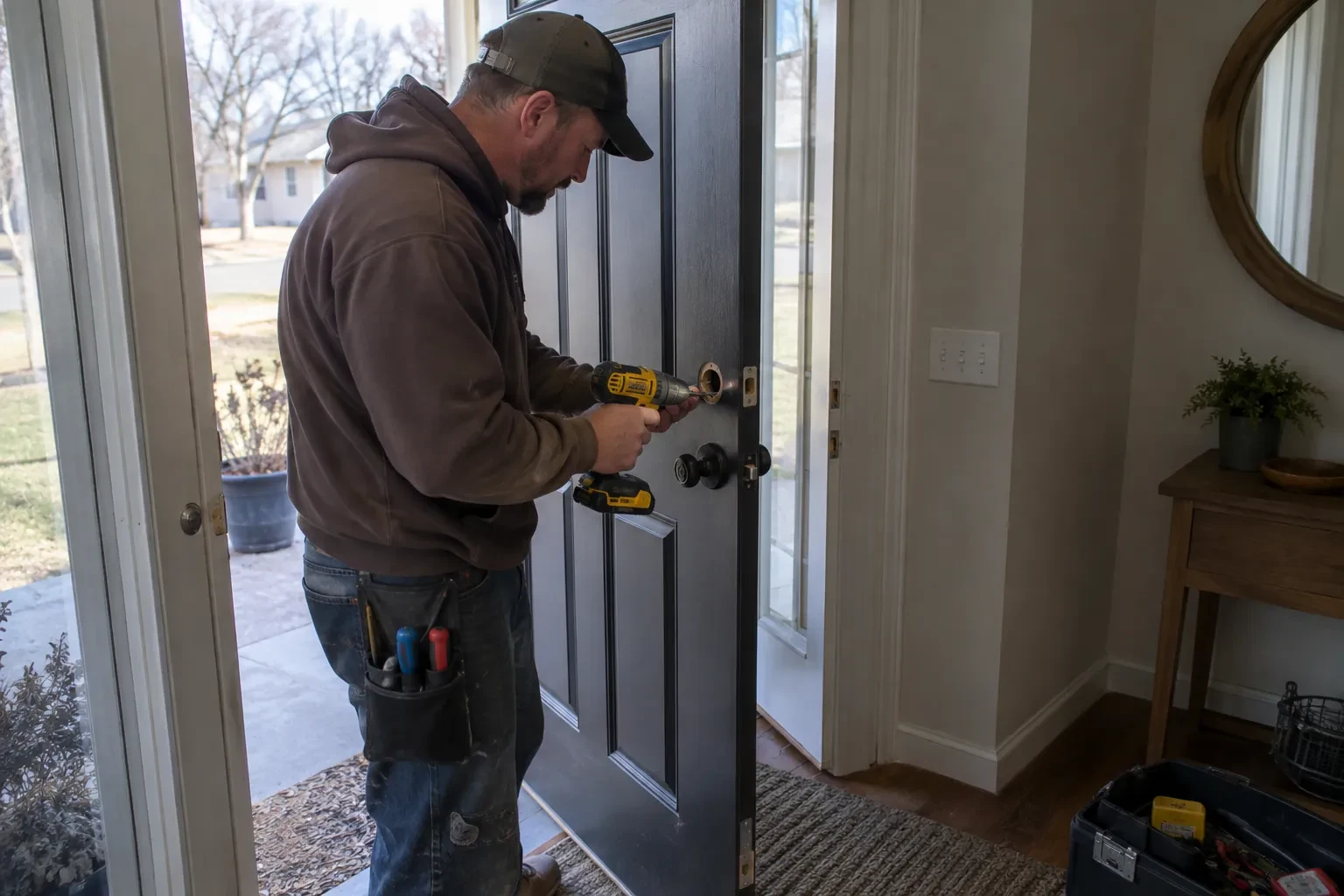
Before blaming the lock, the locksmith looks at the key. A key that has been copied from another copy several times drifts away from the true cuts, a worn key no longer lifts the pins to the shear line, and a bent key binds before it is fully seated. If an original or a rarely used spare exists, it is tried; a lock that opens with the spare has told you the problem. Some cylinders also retain the key until the plug is returned to its neutral position, and a key that seems trapped may simply be a plug that has not come back. A fresh key cut from the code is a common outcome.
Scene 2
With access restored, a cylinder that seized gets a proper service. The locksmith removes it from the door, slides the plug out with a follower so the top pins and springs stay put, and lays out the pin stacks. Everything is cleaned, worn bottom pins and tired springs are replaced, and any burr on the plug is dressed. The plug is reassembled to the same combination so your existing keys keep working, then lubricated with the product that cylinder's maker specifies and cycled until it turns with a fingertip. If the key that jammed was worn, a fresh one is cut from the code rather than from that key.
Scene 3
You are told plainly which family the jam belonged to and what was done: cylinder cleaned and rebuilt, tailpiece replaced, strike moved, hinges shimmed, mortise spring fitted, or cylinder replaced and keyed to your existing key. Replaced parts are handed over so you can see the wear or the break for yourself. For a rental, tenants and landlords both benefit from that note, since it records that the lock was serviced rather than changed. For an owner it goes in the home file beside the keyway and key code, which makes the next key cut or the next service a shorter conversation.
What shapes the quoteLeaside Lock Experts
FeesSame any hour
The key and cylinder are doing their job; the bar behind the cylinder that drives the bolt, called the tailpiece or cam, has broken, slipped or twisted out of engagement. It is a small part. The locksmith retracts the bolt through the mechanism or removes the cylinder to reach it, then fits a tailpiece of the right length and profile. Your cylinder and keys are unchanged afterwards.
Often, and keeping the original hardware is usually worth trying first, since it fits the door and suits the house, though condition and the availability of matching parts decide whether a repair is realistic. The case comes out of the door edge, the decades of dust and hardened grease are cleaned away, a broken spring or worn hub is replaced with a matching part, and the contact surfaces get fresh grease. If a bit key or a cylinder has worn, a new key is cut or the cylinder rebuilt.
Two reasons meet in the same season. Freeze-thaw weather sends meltwater into the keyway by day and freezes it by night, and cold thickens any old grease or oil that has been sprayed into the pins. At the same time dry, heated indoor air shrinks wood doors so bolts move in their pockets. Doors on the shaded or windward side get the worst of it. A dry lubricant, a keyhole cover and a check of the strike after the first hard frost take care of most of it.
TorontoOntario
Seized & Jammed Lock Opening · Flemingdon Park, Leaside, Parkview Hill, Thorncliffe, Woodbine Heights
Every square is one home in a hundred.
On-site assessment
The lock works, but only if you lean on the door with your hip while turning the key.
(289) 806-8979, open 24/7.
On-site assessment preferred · (289) 806-8979, open 24/7