Sound familiar?Toronto
- The call
- The pharmacy stockroom, the server closet or the cash office is protected by the same ordinary cylinder as the staff washroom. One lost key on a lanyard would open all of them.
You run a home office with client files and equipment, and your insurer has asked what kind of lock is on the door. The honest answer is the builder's knob lock and a light deadbolt from when the house was new.
High security locks are cylinders and deadbolts designed to defeat the methods used against ordinary doors. Inside the cylinder a second locking mechanism, usually a sidebar released by finger pins or rotating pins, has to be satisfied at the same time as the normal pin stack, which is what stops picking and bumping. Hardened steel inserts stop drill bits. The bolt is thicker and carries a hardened pin against sawing, and a reinforced strike ties the lock into the wall framing. Just as important, the key is cut on a patented blank that only an authorised person can have copied, so your key count stays known.
Sound familiar?Toronto
High Security Locks · Toronto
Scene 1
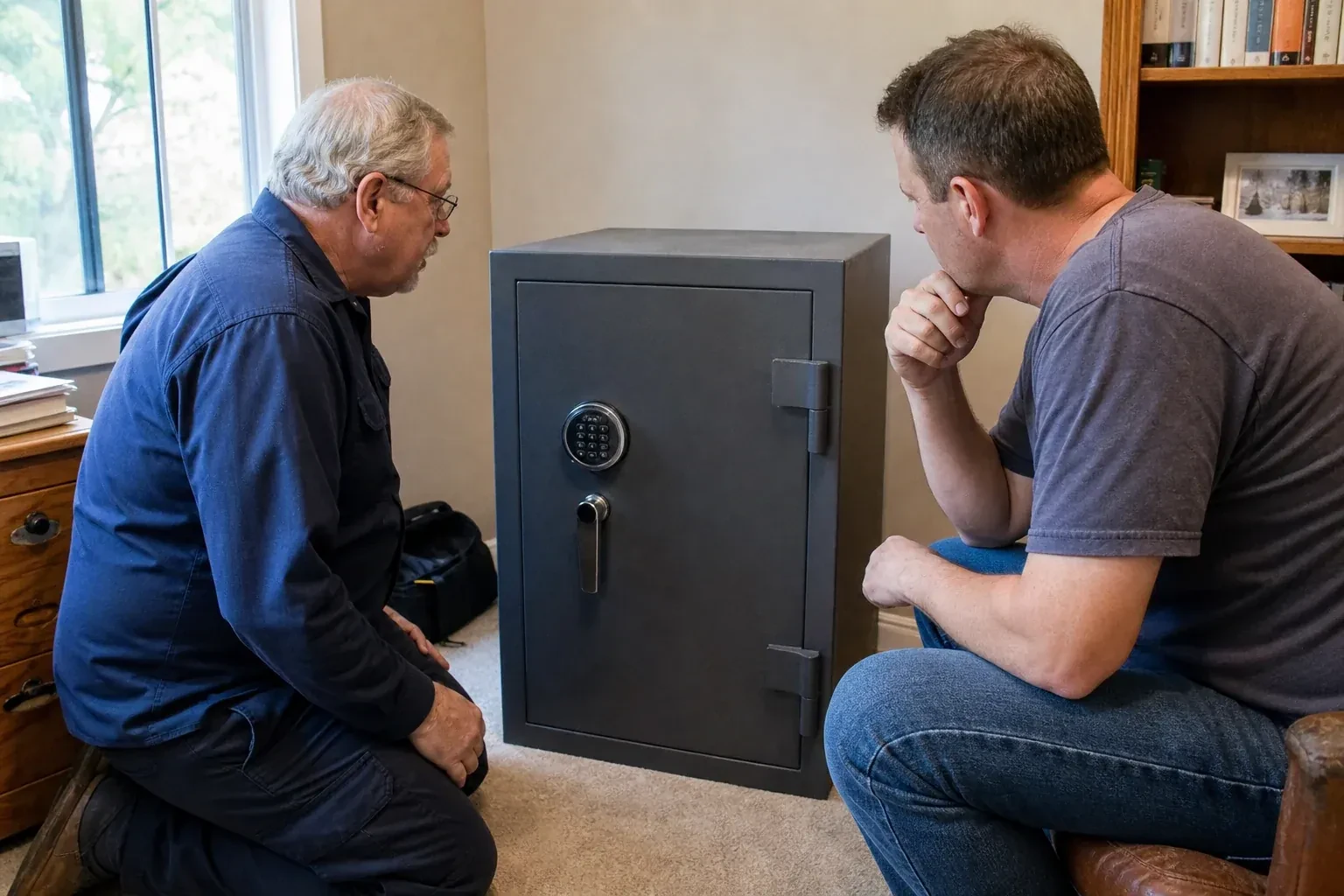
The assessment starts with a question rather than a tape measure: what is behind this door, and what has made you think about it now? A front door on a family home, a stockroom with prescription drugs and a server closet in an office carry different risks and deserve different levels of hardware. The locksmith also asks who has keys today and how sure you are of that count. Those answers decide whether the right answer is a graded deadbolt with a controlled key, a laboratory-rated cylinder in a heavy lock body, or a small keyed system across several doors. Spending goes where the risk actually sits.
Scene 2
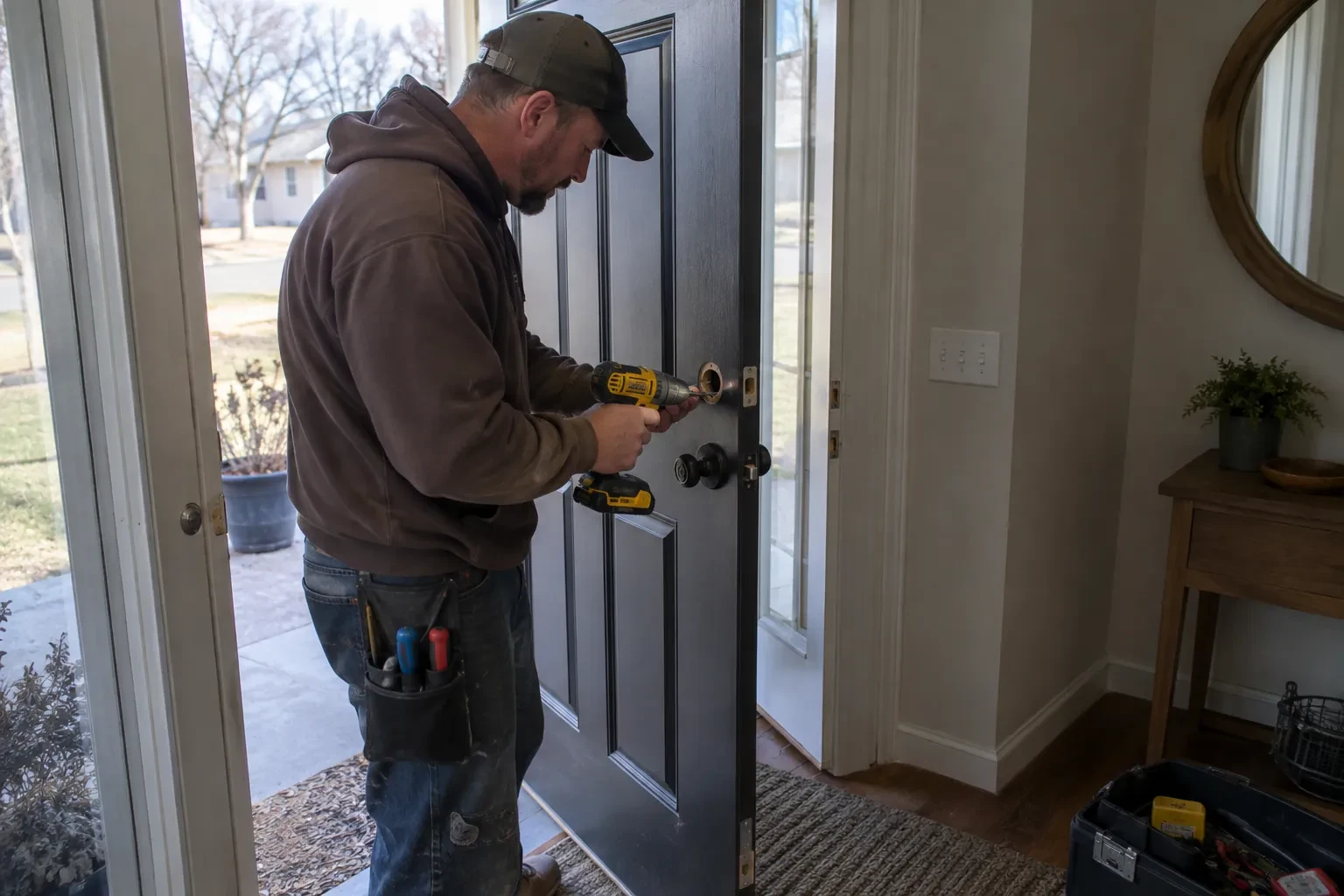
Part of the visit is making the old keys meaningless. Once the new cylinders are in, every previous key is tried to confirm it no longer operates anything, and any remaining door on the old keyway is either upgraded or at least rekeyed so an unknown copy has nowhere to go. The locksmith also closes small gaps found during the assessment: replacing hinge screws with long ones, adjusting a closer, adding a cylinder guard, or moving a thumb-turn away from glass. The door leaves the visit as one coherent assembly rather than one strong part among weak ones.
Scene 3
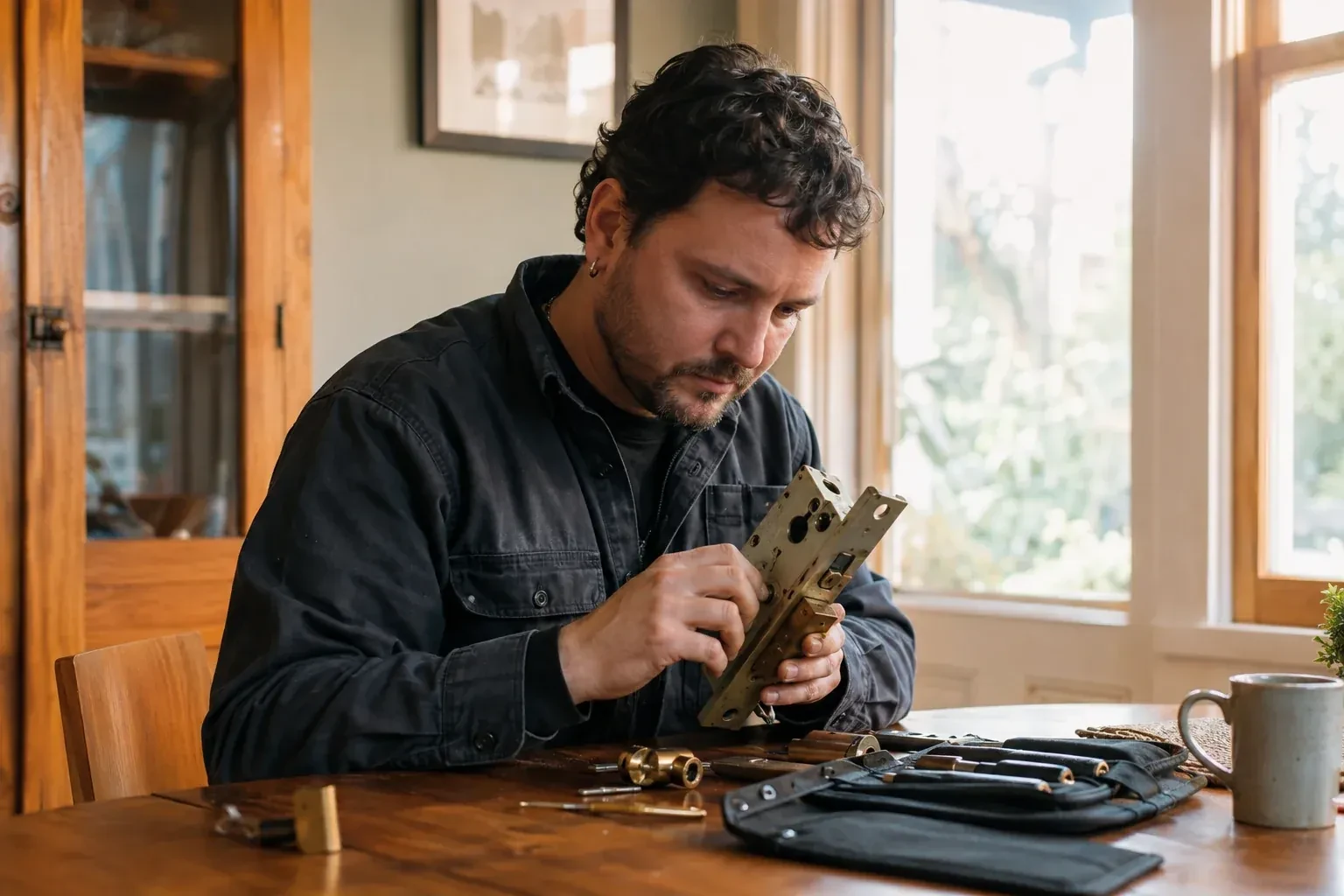
Many customers finish the visit carrying fewer keys than they started with. Exterior doors keyed alike mean one key for the house; a small master system means a manager carries one key for the whole premises. Each key has a known job. The locksmith explains which key opens which door and leaves that in writing, so the tenth person to ask does not get a shrug. Should you add a door later, a gate, a garage entry or a new office, it can join the same system so you keep the single-key convenience without opening a fresh keyway.
What shapes the quoteLeaside Lock Experts
FeesSame any hour
Locks and deadbolts are tested against industry standards for security, durability and finish. Commercial hardware is graded 1, 2 or 3 with grade 1 the highest. Residential hardware carries a letter label for each of the three categories, from C for good through B to A for the top level. Security tests include hammer blows and pulling on the lock; durability covers cycle life and seasonal misalignment; finish covers salt, humidity and scratching. Your locksmith translates the label for your door.
Start with the doors that matter and the ones that are weakest, which are often not the same. Front doors usually carry the sturdiest hardware already; the side door by the driveway, the door from the garage and the basement walkout often carry the lightest locks and get the least attention. The assessment walks the whole perimeter with you so the upgrade goes where entry is most likely, and the remaining doors can join the same key later.
The locksmith confirms that the person ordering the work is entitled to change the locks: the owner, a tenant with the landlord's agreement, or a property or facilities manager for a business. Photo identification and something linking you to the address usually settle it, and for a company a letter or a call to the named contact does the same. It protects you as much as anyone, since the same check stops someone else from changing your locks.
TorontoOntario
High Security Locks · Flemingdon Park, Leaside, Parkview Hill, Thorncliffe, Woodbine Heights
Every square is one home in a hundred.
On-site assessment
You run a home office with client files and equipment, and your insurer has asked what kind of lock is on the door.
(289) 806-8979, open 24/7.
On-site assessment preferred · (289) 806-8979, open 24/7