Sound familiar?Toronto
- The call
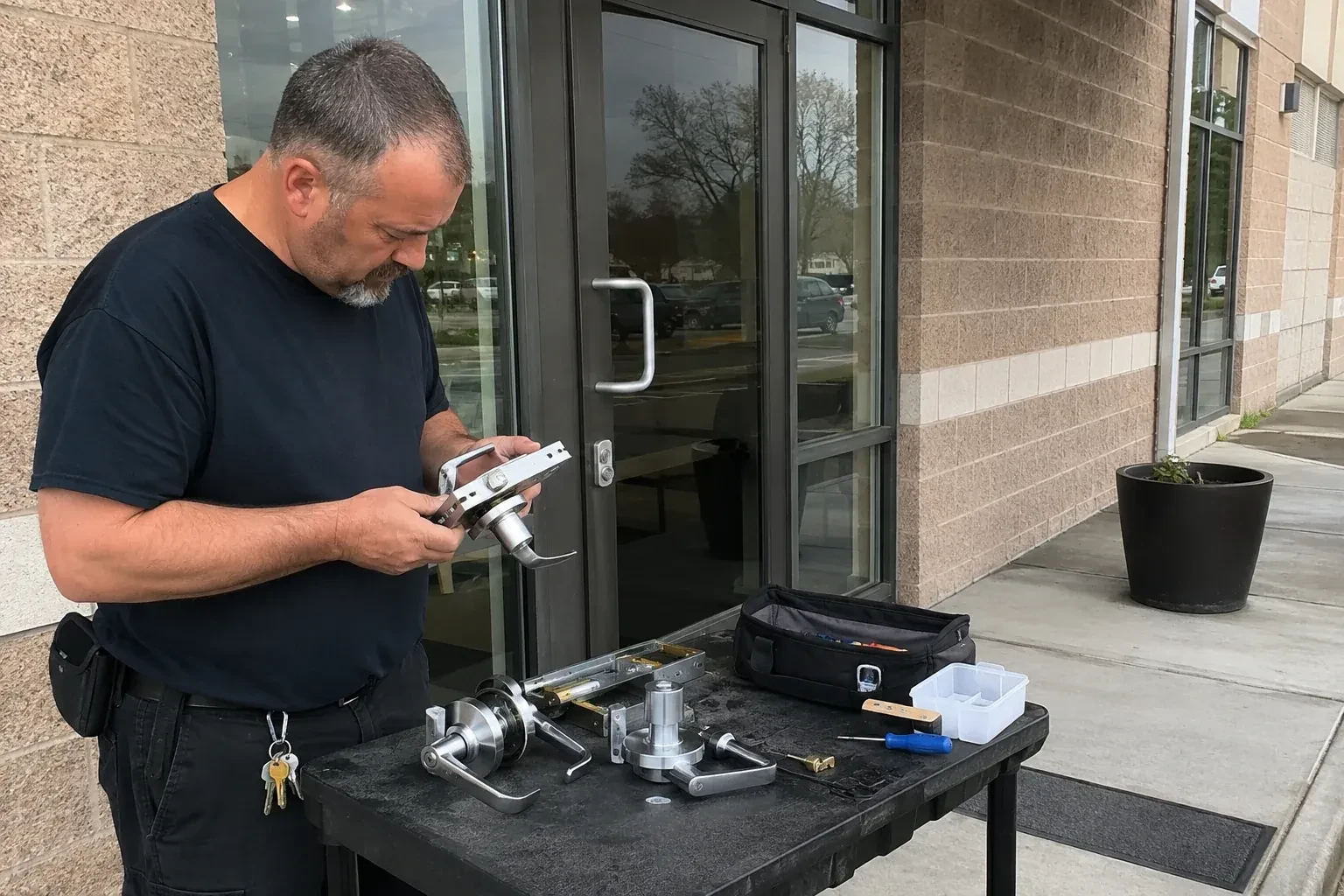
- An inspection report flagged the rear exit as needing hardware that opens with one motion and no key, and that door currently has an ordinary keyed knob on the inside.
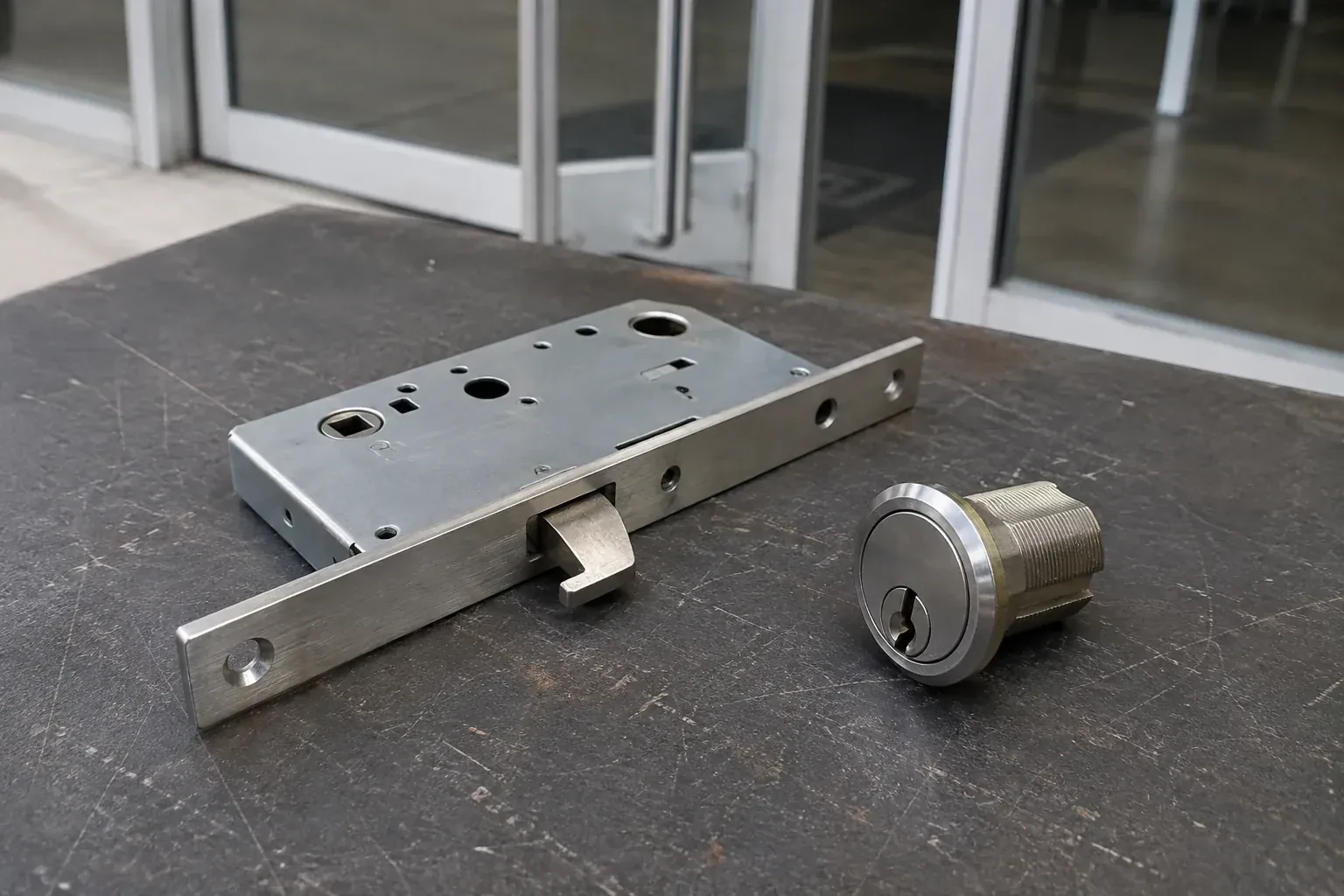
Overnight someone forced the back door, and the cylinder face is scarred, the metal around the strike has pulled loose from the frame, and the latch no longer sits flush.
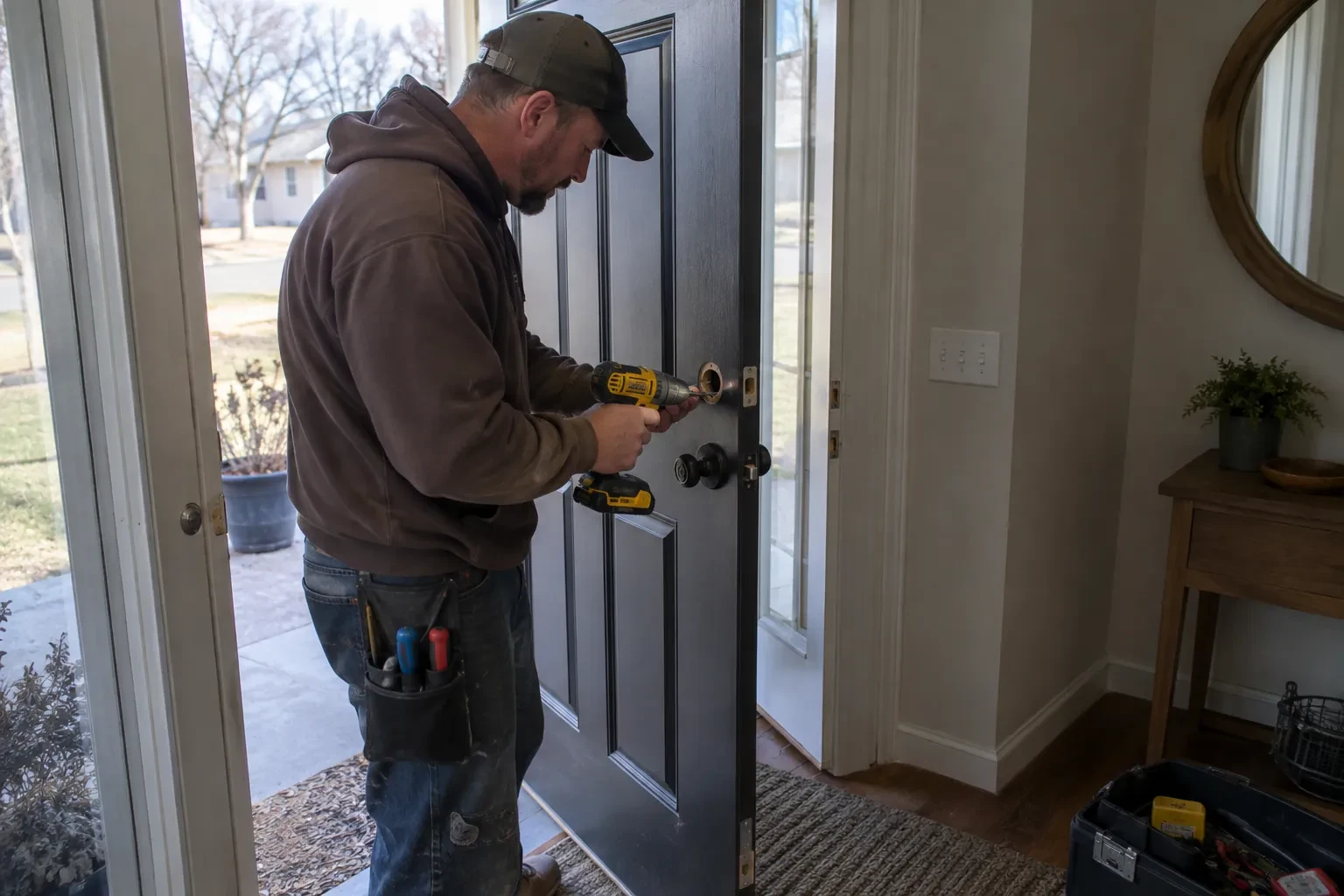
Think of it as re-equipping a door for the job it actually does rather than swapping one lock for a similar one. A back door taking deliveries all shift needs different internals than a quiet office entrance, and a storefront's aluminum frame needs a narrow-stile lock a wood door was never built to accept. The locksmith matches lock body, cylinder and strike to the door's real prep and real use, decides with the business whether the new hardware joins an existing master key system or starts a new one, and leaves the opening cycling cleanly from both sides before the visit ends.
Sound familiar?Toronto
Commercial-Grade Lock Replacement · Toronto
Scene 1
Some commercial doors are part of a fire separation or a required exit route, and that status changes which hardware is legal to install on them. The locksmith looks for a fire label on the door and frame, checks whether the opening serves an assembly space or a high-occupant-load area that calls for listed, push-type release hardware, and confirms whether the door is required to close and latch on its own. None of this is guesswork; it is read directly off the door, its label, and the building's own occupancy information.
Scene 2
Where the opening already carries an electric strike, a maglock, a door position switch or a card-reader tie-in, that wiring is reconnected to the new mechanical hardware and tested together rather than assumed to still line up. Voltage, fail-safe or fail-secure operation, and monitoring contacts are confirmed against what the access-control or alarm system expects, since electrified hardware that is almost, but not quite, matched to the mechanical lock is a common source of a door that buzzes open but still needs force.
Scene 3
Where the door forms part of a fire separation or a required exit route, the new hardware is listed for that use and the door has been tested to confirm it still closes and latches on its own. Any push-type release hardware installed to meet an occupant-load threshold has been checked across the whole route it serves, not just at the one door where the call started. The business leaves with an opening that satisfies the condition that triggered the work, rather than a lock that merely looks similar to what was there before.
What shapes the quoteLeaside Lock Experts
FeesSame any hour
Yes, that is usually the first decision made. The locksmith checks whether your doors already run on a master or grand-master system, an interchangeable-core setup, or a restricted keyway, and orders replacement cylinders that slot into whichever structure you want to keep or move to. Bringing a new door onto an existing system is generally simpler than starting that door on its own.
That is entirely your choice. Some businesses keep old hardware briefly in case a spare part is needed elsewhere on the same system, others prefer it removed from the site straightaway, particularly after a break-in where the damaged pieces are no longer wanted around. The locksmith can leave it with you or take it away, whichever you prefer.
Related but not identical. Panic hardware allows single-motion release without a key on any qualifying exit door. Fire exit hardware does the same job on a door that is also part of a fire separation, and it is listed for that combined use with no mechanical hold-open feature, since a fire door has to be able to close and latch on its own at all times.
TorontoOntario
Commercial-Grade Lock Replacement · Flemingdon Park, Leaside, Parkview Hill, Thorncliffe, Woodbine Heights
Every square is one home in a hundred.
On-site assessment
Overnight someone forced the back door, and the cylinder face is scarred, the metal around the strike has pulled loose from the frame, and the latch no longer sits flush.
(289) 806-8979, open 24/7.
On-site assessment preferred · (289) 806-8979, open 24/7