Sound familiar?Thorncliffe
- The call
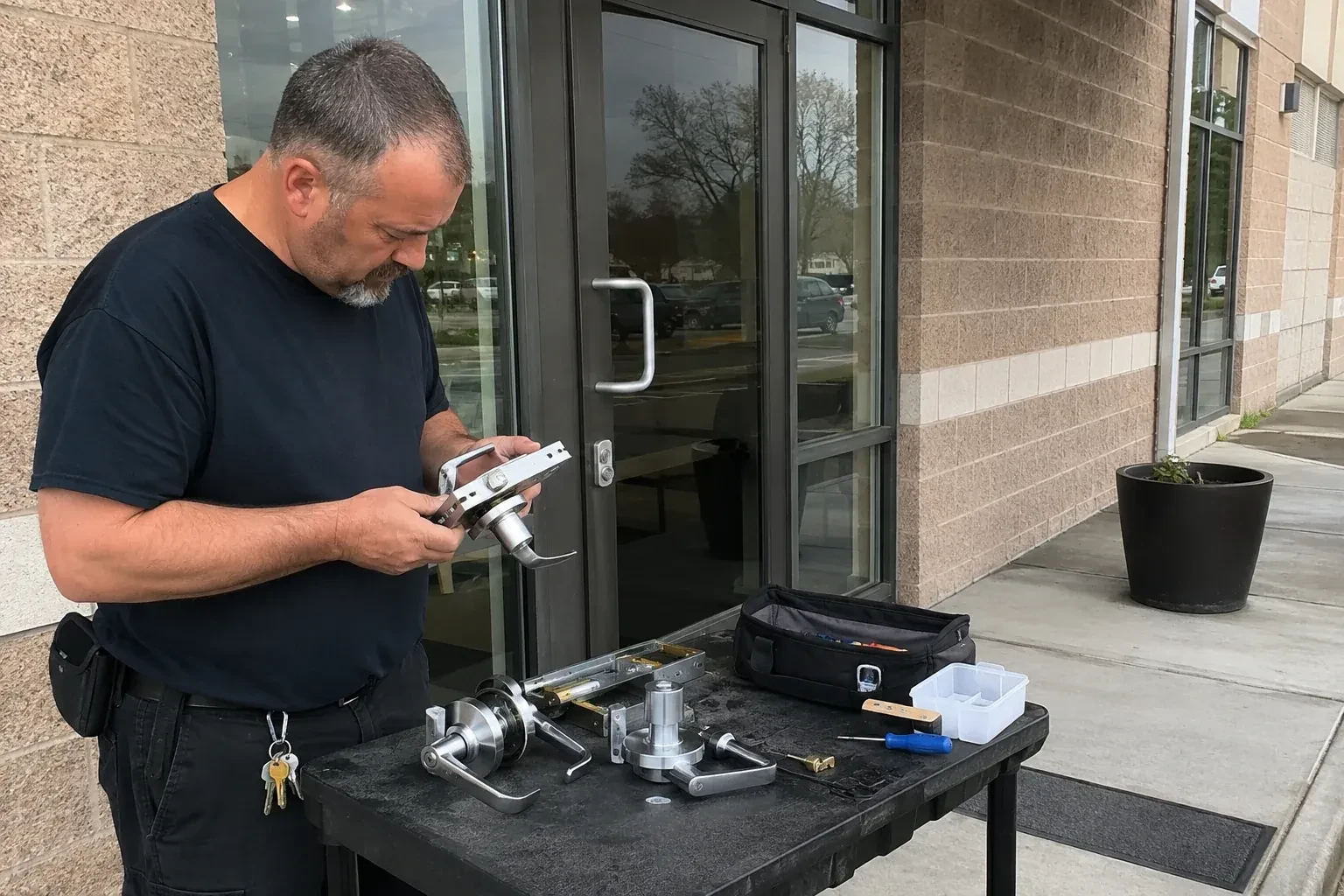
- An inspection report flagged the rear exit as needing hardware that opens with one motion and no key, and that door currently has an ordinary keyed knob on the inside.
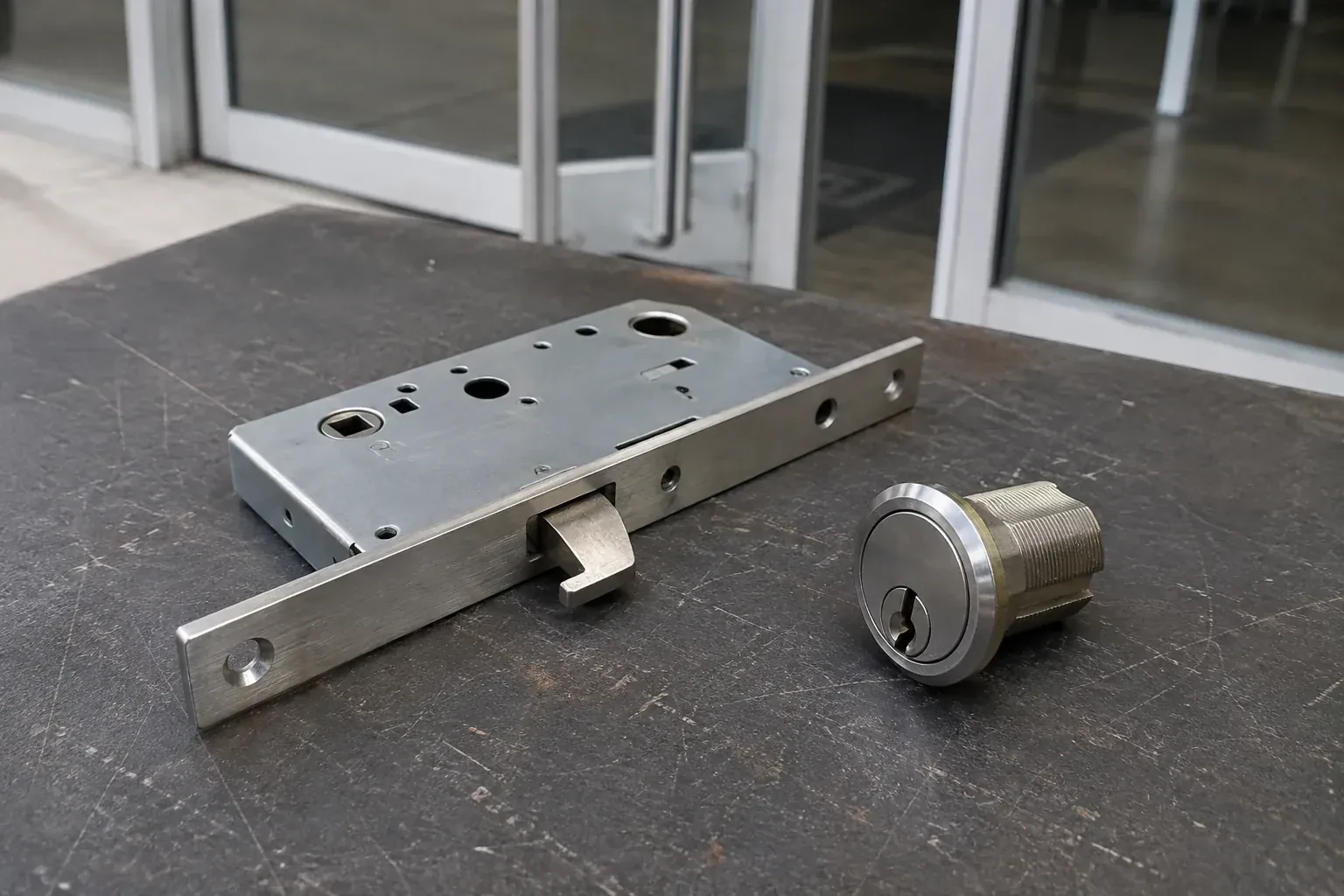
Overnight someone forced the back door, and the cylinder face is scarred, the metal around the strike has pulled loose from the frame, and the latch no longer sits flush.
For a business running several locations, this service is often less about one broken lock and more about bringing every door onto a single, manageable key or interchangeable-core system. The locksmith surveys what is currently on each door, works out a keying structure the business can actually administer, from a single master down to individual change keys, and replaces mismatched hardware with cylinders built to accept that structure. Keys are cut and logged against the new system, and any hardware still under a fire or egress rule is checked and matched to that rule at the same time.
Sound familiar?Thorncliffe
Commercial-Grade Lock Replacement · Thorncliffe
Scene 1
Before any hardware is opened up, the locksmith confirms who is speaking for the business: an owner, a property manager, or a staff member the account recognizes as authorized to order and pay for the work. On a multi-tenant building this also means confirming which doors belong to which lease. This step exists for the same reason a home lockout starts with identification: a business's security is only as good as its record of who was allowed to change it, and a clear authorization at the start keeps that record clean.
Scene 2
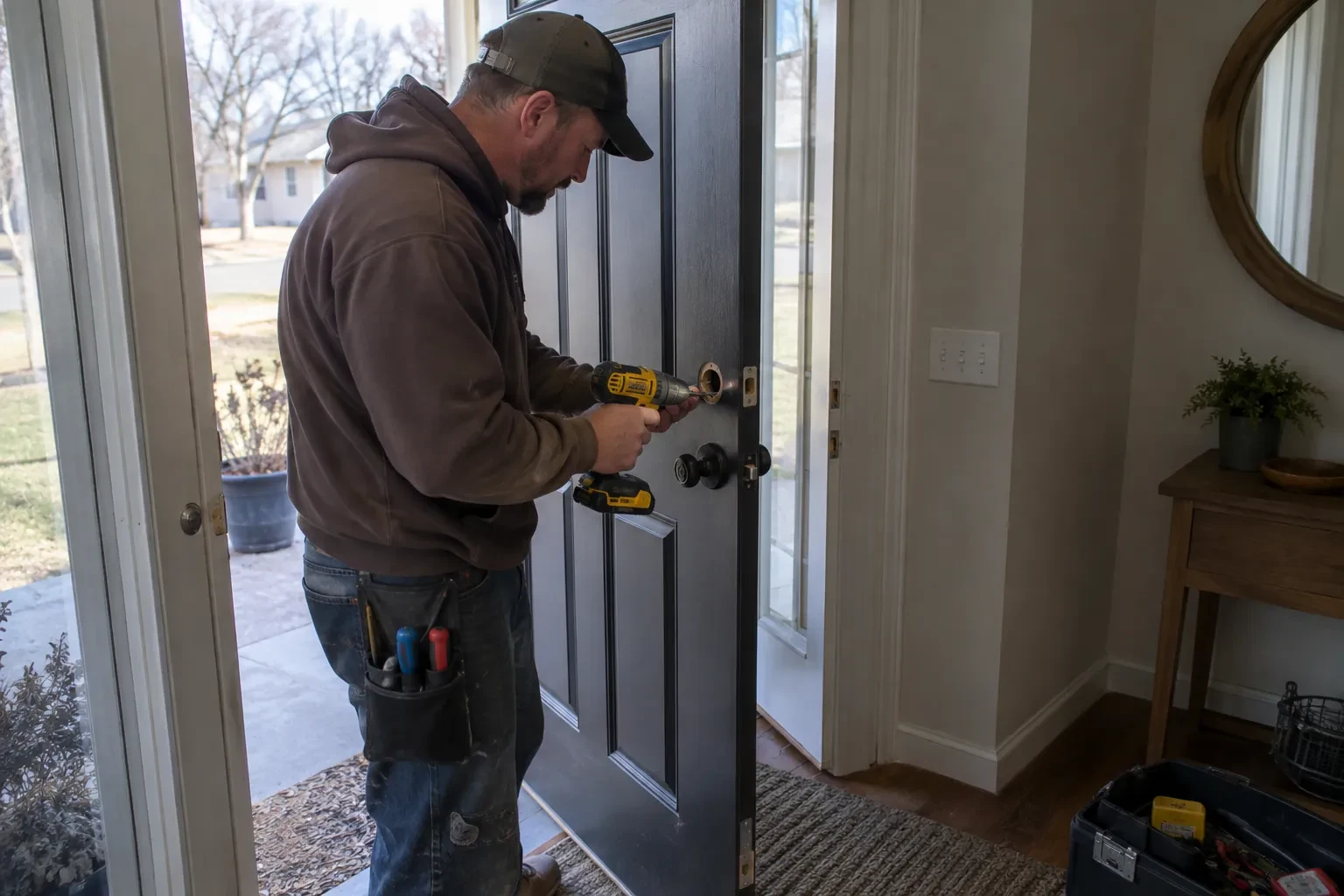
The cylinder installed is the one agreed during the assessment: keyed into an existing master or grand-master system, set up as a new interchangeable core the business can rekey itself later, or cut to a restricted keyway that limits who can order duplicate keys. Where several doors are being brought onto one system in the same visit, cylinders are combinated so a single key or a defined set of keys operates every door that is supposed to share access.
Scene 3
The business keeps a plain account of what was fitted: the hardware model and function, the keying it was cut to, how many keys were issued and to whom, and any fire or exit rating the door carries. For a property manager or facilities team, this record answers the next question about that door without another site visit, and for a business with several locations it becomes a reference for bringing other branches onto the same standard over time.
What shapes the quoteLeaside Lock Experts
FeesSame any hour
Yes, that is usually the first decision made. The locksmith checks whether your doors already run on a master or grand-master system, an interchangeable-core setup, or a restricted keyway, and orders replacement cylinders that slot into whichever structure you want to keep or move to. Bringing a new door onto an existing system is generally simpler than starting that door on its own.
That is entirely your choice. Some businesses keep old hardware briefly in case a spare part is needed elsewhere on the same system, others prefer it removed from the site straightaway, particularly after a break-in where the damaged pieces are no longer wanted around. The locksmith can leave it with you or take it away, whichever you prefer.
Related but not identical. Panic hardware allows single-motion release without a key on any qualifying exit door. Fire exit hardware does the same job on a door that is also part of a fire separation, and it is listed for that combined use with no mechanical hold-open feature, since a fire door has to be able to close and latch on its own at all times.
TorontoOntario
Commercial-Grade Lock Replacement · Toronto, Flemingdon Park, Leaside, Parkview Hill, Woodbine Heights
Every square is one home in a hundred.
On-site assessment
Overnight someone forced the back door, and the cylinder face is scarred, the metal around the strike has pulled loose from the frame, and the latch no longer sits flush.
(289) 806-8979, open 24/7.
On-site assessment preferred · (289) 806-8979, open 24/7