Sound familiar?Leaside
- The call
- There is a hole where the cylinder used to be. Somebody twisted it out of the deadbolt with a wrench, and now the empty bore looks straight through to the kitchen, with the bolt still stuck in the frame.
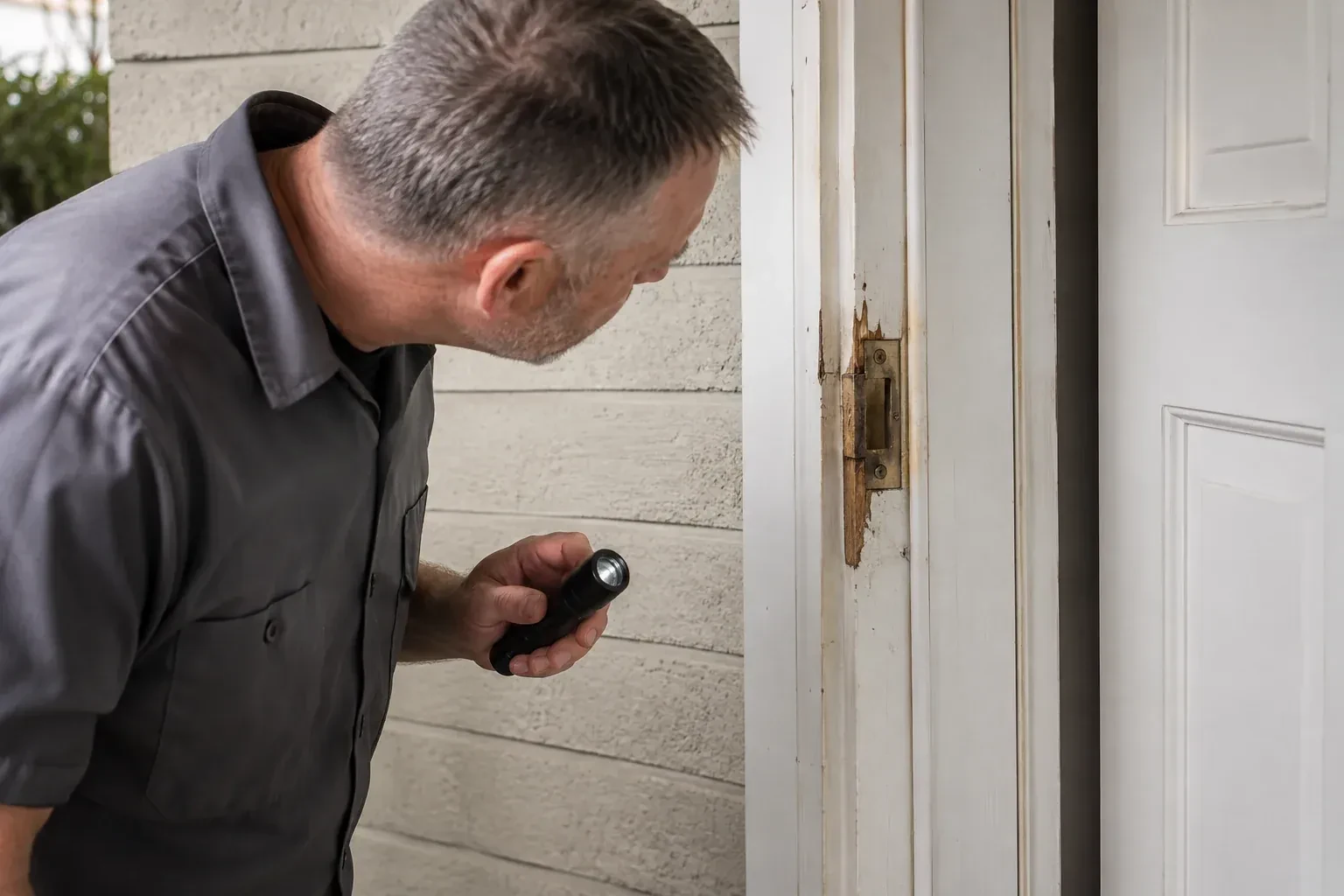
There is a hole where the cylinder used to be. Somebody twisted it out of the deadbolt with a wrench, and now the empty bore looks straight through to the kitchen, with the bolt still stuck in the frame.
Most forced doors fail at the frame, not the lock. A standard strike plate is held by two short screws in a softwood jamb, and a kick transfers the whole force of a body to those screws. The bolt usually survives; the wood around it does not. Swapping the deadbolt for a heavier one leaves the weak point untouched, so a proper break-in repair rebuilds the strike side with a boxed strike, a pocket cut to full depth and three-inch screws that pass through the jamb and the shim space into the stud behind. The lock is replaced too, but the frame is where security returns.
Sound familiar?Leaside
Break-In Damage Lock Repair · Leaside
Scene 1
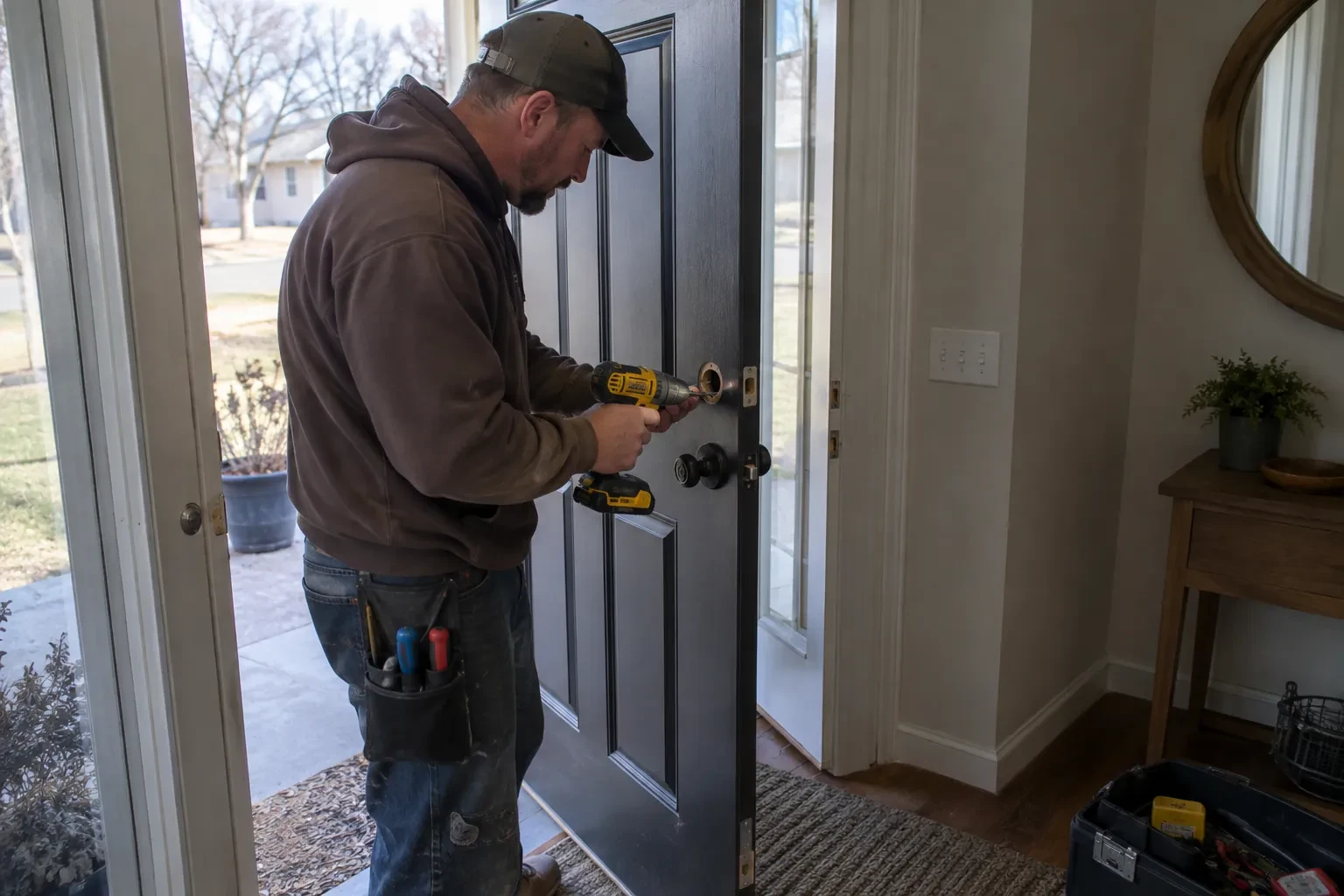
An impact hard enough to break a strike usually moves the door as well. The locksmith checks that the door sits square in its opening, closes on its weatherstrip without force, and that the bolt lines up with its pocket rather than dragging on the strike lip. Hinge screws are tested for grip, since a kick can pull them from the jamb even on the side that was not attacked, and the hinge leaves are checked for bending. Manufacturers treat strike position, pocket depth and door alignment as working parts of the lock, and a repair that ignores them produces a door that locks badly the day after it was fixed.
Scene 2
Aluminum storefront doors fail differently: the narrow stile bends under a pry bar, the hookbolt or deadlatch is forced, or the glass is broken. The locksmith straightens or replaces the stile section where possible, fits a new narrow-stile deadbolt or hookbolt with a matching strike, and adds a latch guard plate or an anti-pry astragal along the meeting edge so a bar has nothing to grip. Interchangeable cores are rekeyed and access codes reviewed with the owner. Where the door is part of an exit route, the inside hardware is kept as a single-motion release so the repair strengthens the entrance without changing how people leave.
Scene 3
You are left with a plain written account: which opening was forced, what was found damaged, what was replaced, what was reinforced and with what, which locks were rekeyed and how many keys were cut, and what remains for another trade. The photographs taken before work began sit alongside it. The broken hardware is bagged for the adjuster unless you say otherwise, and the receipt for the securing visit goes in the same folder, since insurers ask policyholders to keep damaged property and receipts. Together these turn a stressful evening into a claim file that answers questions before they are asked.
What shapes the quoteLeaside Lock Experts
FeesSame any hour
A large one. Factory strike and hinge screws are usually short enough to grip only the jamb, a piece of trim about an inch thick. Three-inch screws pass through the jamb and the gap behind it into the stud, so a blow has to move the wall rather than the trim. Lock manufacturers supply reinforcement plates with three-inch screws for exactly this reason, and note that a door beside a sidelight needs a different arrangement because glass sits where the stud would be.
Yes, unless the insurer has already said they are not needed. Insurers generally ask policyholders to retain damaged property until the claim is settled, and a bag holding the twisted cylinder, torn strike and split wood answers an adjuster's questions more clearly than any description. The locksmith hands them over at the end of the visit along with a written note of what was replaced. Photographs of the parts in place, before removal, complete the record.
Treat it as two exposures. The house key is handled by rekeying every lock it fits. The remote is handled at the garage door opener: its memory is erased so every old remote stops working, and new remotes are programmed. If the car had your address on its paperwork, do both before anything else. A locksmith can rekey the doors and, on many openers, clear the remotes during the same visit or show you the learn button on the motor unit.
TorontoOntario
Break-In Damage Lock Repair · Toronto, Flemingdon Park, Parkview Hill, Thorncliffe, Woodbine Heights
Every square is one home in a hundred.
On-site assessment
There is a hole where the cylinder used to be.
(289) 806-8979, open 24/7.
On-site assessment preferred · (289) 806-8979, open 24/7