Sound familiar?Parkview Hill
- The call
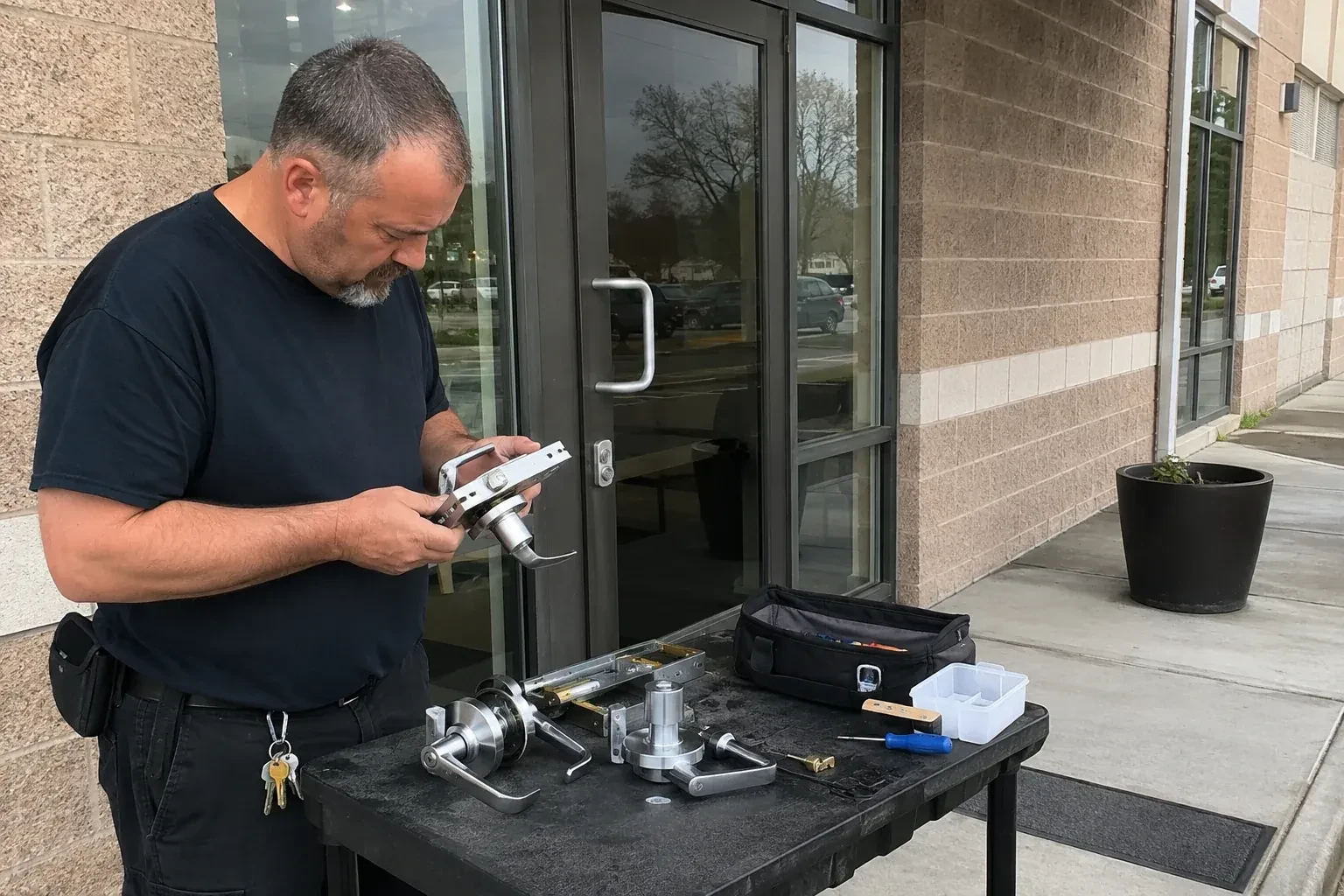
- The crossbar on the loading-dock door barely returns anymore. Someone has to lean into it with a shoulder, and twice this month it has stuck half-latched, propped by whatever was nearest.
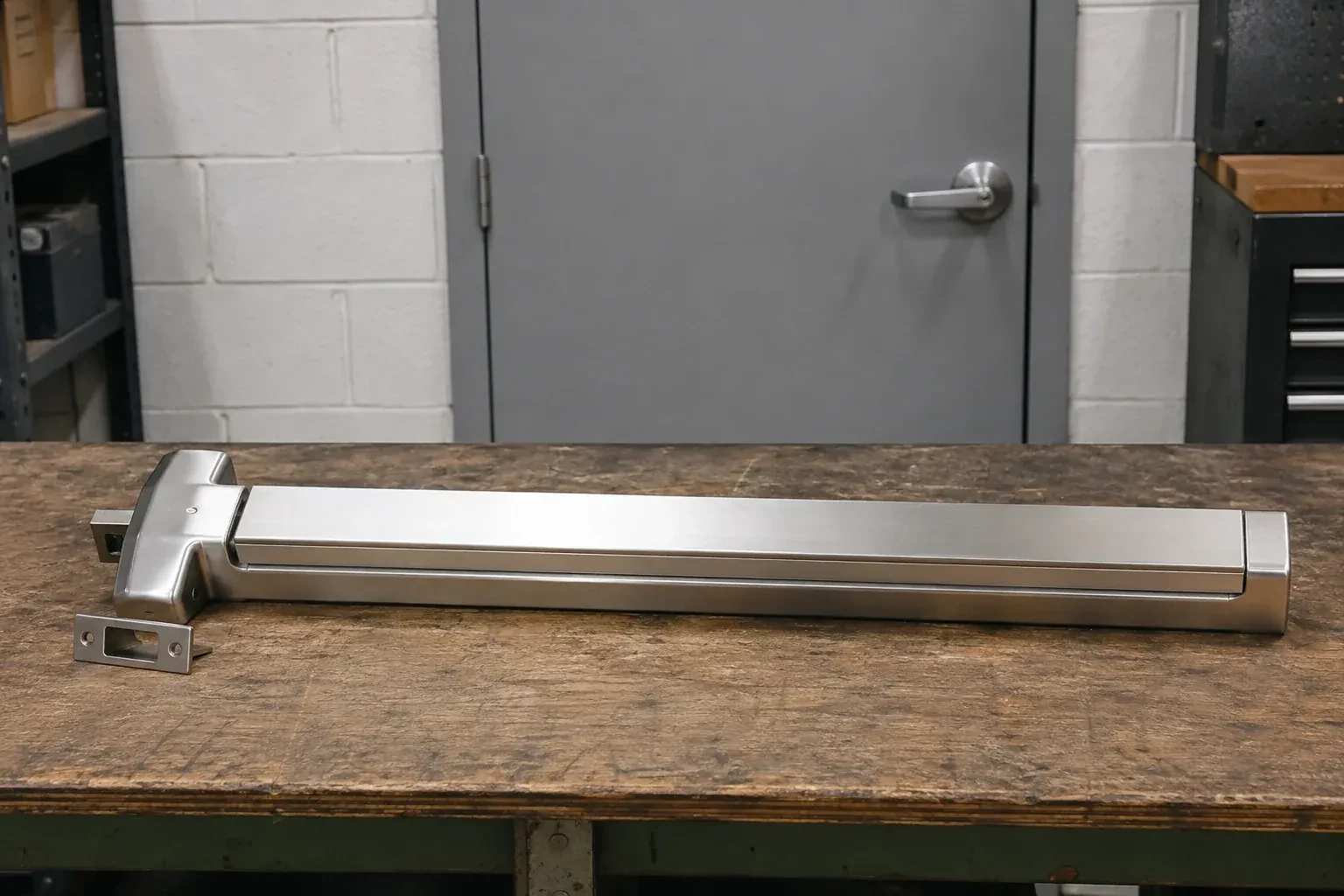
Two doors used to swing as a pair at the community hall entrance, but one leaf has started closing before the other, catching the astragal and leaving a gap wide enough to worry the caretaker.
A code trigger usually starts the conversation: an occupant load over a threshold, a fire inspector's note, or a new use for a room that used to hold far fewer people. From there the visit works out which openings are affected, what device and trim suit each one, and whether a pair of doors needs a coordinator or a mullion removed. The installation follows a template, and every device is tested for release force and full latch engagement before the visit ends, with a written record of what went on the door for anyone reviewing the space afterward.
Sound familiar?Parkview Hill
Panic & Exit Hardware · Parkview Hill
Scene 1
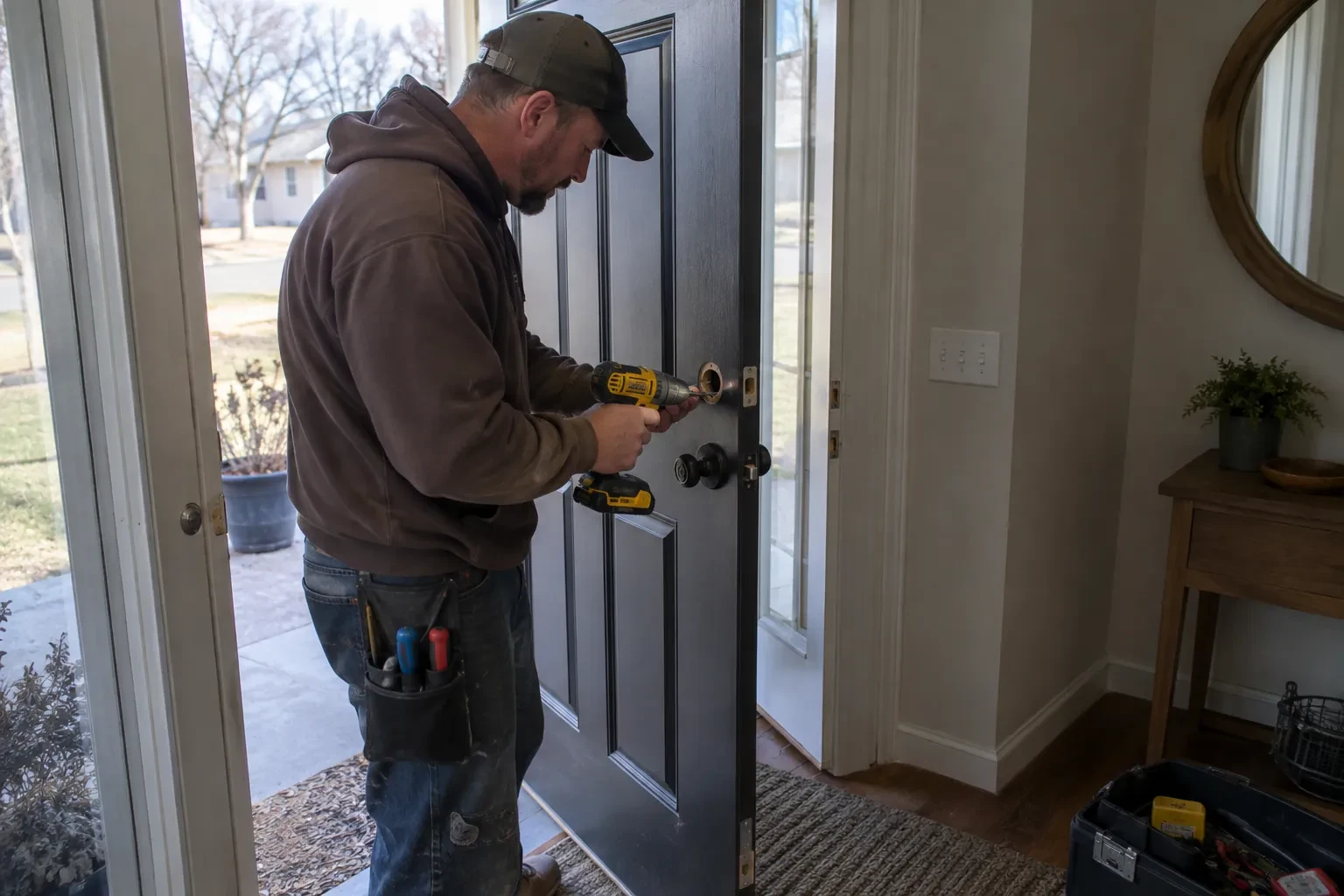
A surprising number of exit-hardware calls turn up a second lock nobody had mentioned: a hasp and padlock added for security, a slide bolt at the top of a rarely used door, or a deadbolt installed long after the original exit device. Each of these has to be understood before work starts, because an exit door can only be trusted to open under one motion if every fastening on it releases the same way. The locksmith notes what is there, explains what it means for the door's exit function, and works out with the owner what stays and what comes off.
Scene 2
The inside of the door stays simple: push to leave, every time. The outside gets whatever lets the right people in, a plain pull for a door nobody needs to unlock from outside, a lever with a key cylinder for staff entry, or a keyed cylinder alone where entry is occasional. Whichever trim is chosen, it operates entirely independently of the inside crossbar, so locking the outside never has any effect on a person's ability to leave from within.
Scene 3
Whoever holds the dogging key or keyed dogging cylinder now knows what it does and, just as importantly, when not to use it: a door in a fire separation keeps its active latch at all times, so dogging belongs on openings where that restriction does not apply. Staff who prop doors for deliveries or busy periods have a legitimate tool for that instead of wedging the door with whatever is nearest, and the building keeps control over who can use it.
What shapes the quoteLeaside Lock Experts
FeesSame any hour
It depends on the pair. Some latch independently and need nothing extra. Where the hardware calls for a set closing order, a coordinator lets the two leaves close in the right sequence, letting the active leaf's device seat properly into a strike carried on the inactive leaf, or into an astragal. Alternatively, the centre mullion can be removed and a vertical-rod device fitted to each leaf, turning the pair into one wide exit. Whichever applies, both leaves are tested working together, not one at a time.
Panic hardware and fire exit hardware share the same push-to-release action, but fire exit hardware is additionally tested and listed for use on a fire-rated door assembly. That extra listing matters because a fire door has to keep an active latch bolt at all times; it cannot carry a mechanical dogging function the way ordinary panic hardware sometimes can, so the two are not interchangeable on a rated opening.
It proves that a specific device, rated for the opening it sits on, releases under an appropriate force, latches fully, and has been tested and recorded on a given date. The record travels with the building, so a fire inspector reviewing the space later is looking at a documented history of that exit rather than testing hardware with no known installation date or specification.
TorontoOntario
Panic & Exit Hardware · Toronto, Flemingdon Park, Leaside, Thorncliffe, Woodbine Heights
Every square is one home in a hundred.
On-site assessment
Two doors used to swing as a pair at the community hall entrance, but one leaf has started closing before the other, catching the astragal and leaving a gap wide enough to worry the caretaker.
(289) 806-8979, open 24/7.
On-site assessment preferred · (289) 806-8979, open 24/7